H2ICE Europe: Who Is Building Hydrogen Combustion Engines, Who Is Deploying Them, and What Comes Next
H2ICE Europe is not one market. It is three overlapping markets with different economics: new-build hydrogen combustion trucks, off-highway engines for construction and agriculture, and fleet repowering for existing diesel assets. MAN and Daimler Truck/KEYOU sit in the first. JCB is proving the second. ULEMCo and Metier are building the third. The engine problem is increasingly well understood. The commercial problem is hydrogen supply, station utilisation and policy classification.
Executive Summary
- H2ICE Europe is best understood as three markets: OEM new-build trucks, off-highway engines and fleet repowering. Each has different economics, certification routes and infrastructure dependencies.
- MAN is the most advanced European truck OEM in public H2ICE deployment, with an hTGX small series of around 200 vehicles planned for selected markets including Germany, the Netherlands, Norway and Iceland.
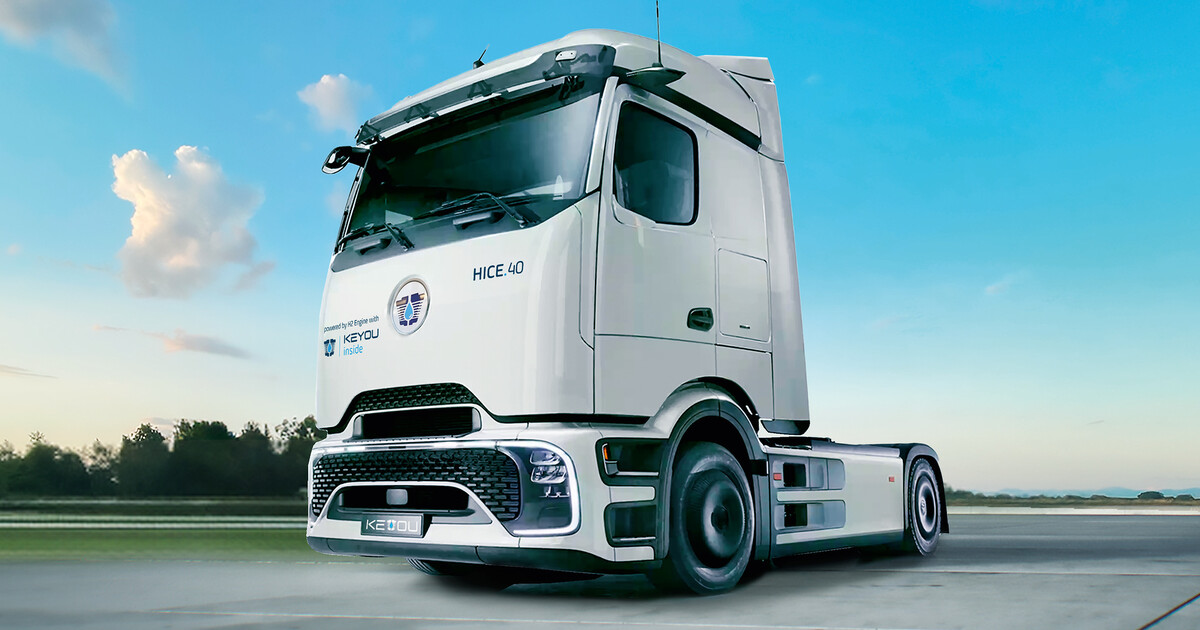
- Daimler Truck and KEYOU have made H2ICE more concrete for mainstream road freight: Actros L 1848 tractor units and Mannheim 12.8-litre engines will form the basis of the KEYOU HICE.40, planned for market launch from the end of 2027.
- JCB is the UK’s strongest H2ICE manufacturer, with more than 130 evaluation engines and certification from 11 European licensing authorities for commercial use in machines.
- Repowering is a separate market from new-build trucks. ULEMCo’s Aberdeen fleet conversions and Metier’s medium-truck repower work show how sunk diesel assets can create early hydrogen demand without waiting for full OEM replacement cycles.
- The central bottleneck is infrastructure utilisation. The EU’s Alternative Fuels Infrastructure Regulation requires public hydrogen stations no more than 200 km apart on the TEN-T network by 2030, but heavy-duty station economics still depend on anchor fleets, uptime and delivered hydrogen cost.
Why H2ICE Is Back On The Serious List
Hydrogen internal combustion engines were easy to dismiss while the sector consisted mainly of prototypes, conference slides and fuel-agnostic optimism. That phase is ending. The current European H2ICE market is still small, but it now has named truck platforms, certified engines, municipal fleet conversions, component suppliers and a regulatory argument that policymakers can no longer file under interesting-but-later.
The engineering appeal is straightforward. H2ICE reuses much of the industrial base created for diesel engines: blocks, crankcases, machining lines, gearboxes, technicians, service networks and duty-cycle knowledge. It trades the electrochemical elegance of a fuel cell for ruggedness, lower system complexity and a faster route into existing vehicle architectures. That matters in heavy-duty transport, off-highway machinery and public fleets where asset life, payload, uptime and maintenance culture are not footnotes.
For the deeper technical foundation, see my earlier guide, Hydrogen Internal Combustion Engine (H2ICE): The Comprehensive 2025 Guide, published on 28 October 2025. This article does something different: it maps the live UK and European deployment landscape, the companies building it, the commercial logic behind it and the policy choices that will determine whether H2ICE becomes a useful decarbonisation tool or another stranded hydrogen enthusiasm.
That three-market framing is the useful starting point. The first market is new-build heavy trucks from OEMs and platform specialists. The second is off-highway engines for construction, agriculture, generators and non-road mobile machinery. The third is fleet repowering, where existing diesel vehicles are converted to hydrogen dual-fuel or full hydrogen operation. Treating them as one market produces bad strategy and worse spreadsheets.
The Deployment Landscape
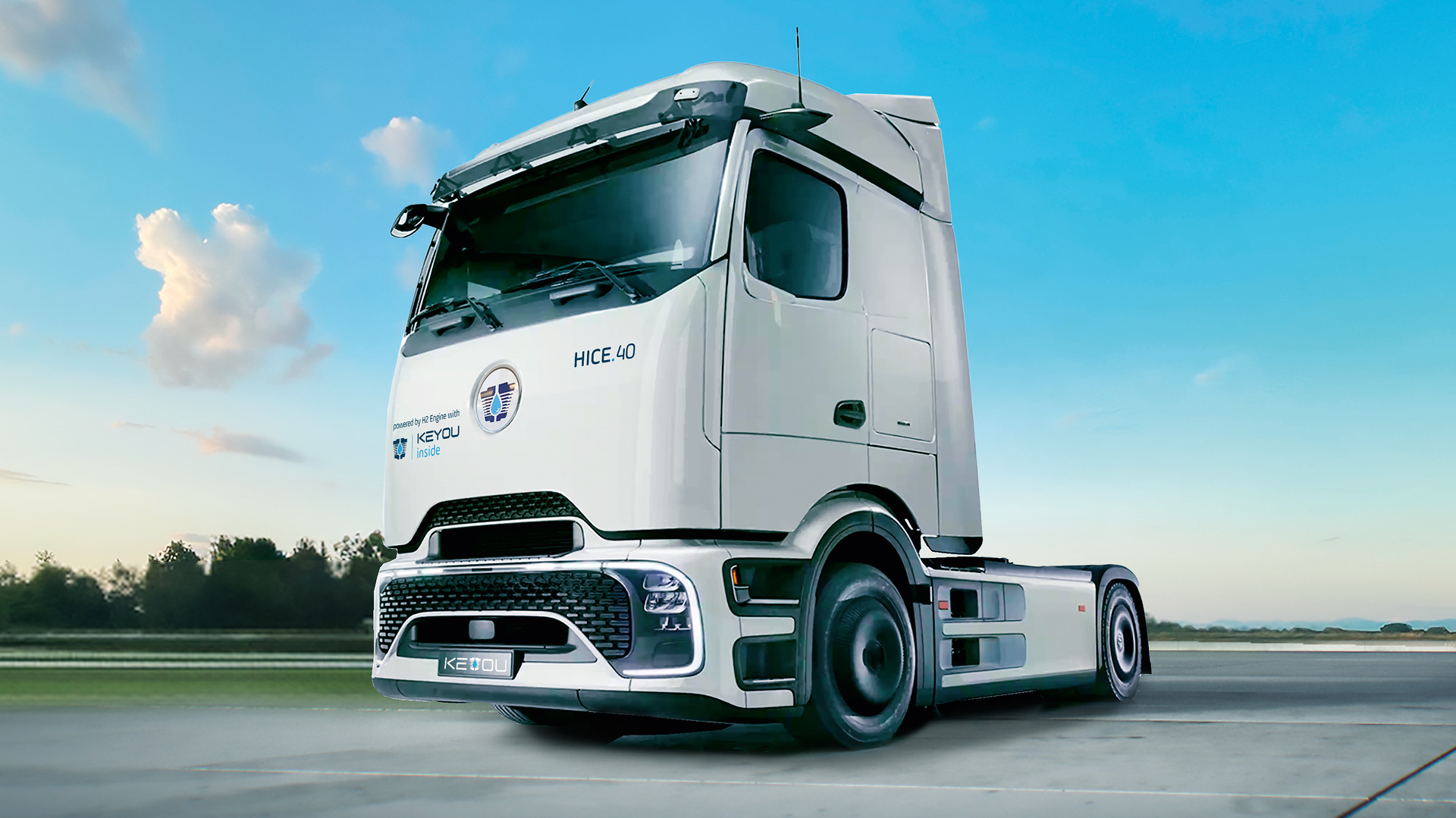
The Daimler Truck and KEYOU agreement announced on 22 June 2026 is important because it uses familiar assets rather than a clean-sheet hydrogen vehicle. Daimler plans to sell Mercedes-Benz Actros L 1848 tractor units and Mannheim-built engines based on its existing 12.8-litre platform to KEYOU. KEYOU will adapt them for hydrogen combustion and offer the resulting KEYOU HICE.40 tractor to customers. Daimler states that the vehicle is designed for 40 tonnes gross vehicle weight, up to 350 kW, 350-bar gaseous hydrogen storage and up to 650 km of range, with market introduction from the end of 2027.
That architecture is commercially revealing. Daimler is not betting the company on a new H2ICE truck line. It is using a partnership model to make hydrogen combustion available faster, with lower programme risk and the option to use existing service structures later. KEYOU gets access to a serious truck platform. Daimler gets a hydrogen combustion offer without derailing its larger battery-electric and fuel-cell strategy. Everyone gets optionality, which is often what companies really buy when infrastructure is uncertain.
MAN is further ahead on actual small-series deployment. Its hTGX uses the H45 hydrogen combustion engine, based on the D38 diesel engine, produced at MAN’s Nuremberg engine and battery plant. MAN says the hTGX will offer up to 600 km range, 383 kW, 2,500 Nm of torque, 700-bar compressed hydrogen storage and refuelling in less than 15 minutes. The company positions it for special applications such as construction logistics, tank transport and timber haulage, particularly where bodywork, payload or infrastructure constraints make battery-electric trucks awkward.
JCB occupies a different but strategically important part of the market. The company says it has spent GBP100 million on hydrogen combustion engine development, with a team of 150 engineers and more than 130 evaluation engines powering backhoe loaders, Loadall telehandlers and generator sets. In January 2025, JCB announced that 11 licensing authorities across Europe had approved its hydrogen engine for sale and use. For construction and agricultural equipment, where machines often work long days in harsh environments and may be first on site before grid services exist, this is not a decorative niche.
ULEMCo shows how H2ICE can enter fleets before OEM replacement cycles mature. Its Aberdeen City Council contract covers an initial 35 vehicles, including refuse collection vehicles, road sweepers, tippers and tractors. ULEMCo’s H2ICED dual-fuel approach does not eliminate diesel immediately, but it creates hydrogen demand from vehicles already in the fleet and can reduce CO2 emissions while preserving operating familiarity. In hydrogen hubs, demand aggregation is not a theoretical benefit. It is the difference between a refuelling asset and an expensive monument.
Company Comparison Table
| Company | Country | Application | H2ICE route | Status in June 2026 |
|---|---|---|---|---|
| MAN Truck & Bus | Germany | Heavy trucks | H45 hydrogen engine based on D38 diesel architecture | hTGX small series of around 200 units planned for selected markets from 2025; up to 600 km range. |
| Daimler Truck / KEYOU | Germany | 40-tonne tractor units | KEYOU conversion of Actros L 1848 and 12.8-litre Mannheim engine platform | Agreement signed June 2026; KEYOU HICE.40 market launch planned from end-2027. |
| JCB | UK | Construction, agriculture, generators | Dedicated hydrogen combustion engine for off-highway machines | Commercial approvals from 11 European licensing authorities; 130+ evaluation engines produced. |
| ULEMCo | UK | Municipal fleets, HGVs, road sweepers, NRMM | Dual-fuel H2ICED conversions and hydrogen repower capability | Aberdeen fleet-wide conversion contract; hydrogen hub demand creation model. |
| Cespira / Westport | Canada / Europe | Heavy-duty truck fuel systems | Hydrogen HPDI fuel system for existing engine architectures | Promotes HPDI H2 as high-efficiency route using shared LNG HPDI components and manufacturing base. |
| Volvo Trucks | Sweden / Europe | Heavy trucks | Hydrogen combustion via high-pressure direct injection pathway | Volvo has publicly stated it is developing hydrogen combustion trucks as part of its decarbonisation portfolio, with commercialisation before 2030. |
| Cummins | US / Europe | Engine supply | Hydrogen ICE engine platforms for medium and heavy-duty vehicles | Important global engine supplier; public pages were Cloudflare-blocked during verification, so this article treats detailed claims conservatively. |
| PHINIA | UK / US / Europe | Hydrogen injection and LCV demonstrators | Fuel injection, engine management and hydrogen combustion systems | Supplier with public H2ICE claims; primary investor page was Cloudflare-blocked during verification, so detailed homologation claims are excluded from the core table. |
| Metier Technologies | UK / Italy | Medium truck repowering | Full engine replacement for existing truck platforms | Promising repower pathway, especially for DAF LF and Iveco Eurocargo class vehicles; needs more public deployment data before being treated as scaled. |
Company Ecosystem Diagram
Commercial Deployment Timeline
Technology Comparison
Market Landscape: Three H2ICE Markets, Not One
New-build trucks are the most visible part of H2ICE Europe, but probably not the first to reach broad profitability. Truck OEMs need confidence in refuelling corridors, residual values, warranty costs, hydrogen quality, maintenance schedules and customer demand. Early volumes will concentrate in special applications: high payload, return-to-base, low charging suitability, local hydrogen availability, public procurement or customers prepared to pay for decarbonisation without losing operational flexibility.
Off-highway machinery has a stronger near-term case. The UK Advanced Propulsion Centre’s H2ICE Task and Finish Group concluded in 2024 that H2ICE should be accepted as a net zero emissions technology for non-road mobile machinery. Its reasoning is practical rather than sentimental. Construction and agricultural machines often have high transient loads, long duty cycles, hostile environments, poor access to grid power and expensive downtime. A battery excavator that cannot work through the duty cycle is not low carbon in any commercially useful sense. It is a scheduling problem with a nice paint job.
Repowering is the under-discussed middle market. Full fleet replacement is capital intensive and slow. Converting existing vehicles can create hydrogen demand earlier, reduce emissions from assets that would otherwise remain diesel for years, and support local hydrogen hubs. Dual-fuel conversion is less pure than a zero-tailpipe-emission claim, but purity is not always the right metric. The commercial question is whether a conversion creates enough real emissions reduction and hydrogen demand to justify the capital cost, downtime and maintenance complexity.
Engineering Analysis
Hydrogen combustion looks simple until the details arrive. Hydrogen has high gravimetric energy density, very low ignition energy, high flame speed and a wide flammability range. Those properties make it attractive for lean combustion but also make pre-ignition, knock, NOx control and storage integration serious design work. The best H2ICE programmes are not diesel engines with optimism added. They are redesigned combustion systems with injection strategy, turbocharging, exhaust gas recirculation, aftertreatment and calibration matched to hydrogen’s behaviour.
Port fuel injection, as used in the KEYOU HICE.40 concept described by Daimler, is a practical near-term route because it is comparatively simple and compatible with lower-pressure gaseous hydrogen. High-pressure direct injection, pursued by Cespira and others, can improve efficiency and power density by reducing displacement of intake air and improving combustion control. That comes with more demanding injection hardware and integration complexity. The engineering trade-off is the familiar one: a simpler system can reach customers faster; a more advanced system may win on efficiency and total cost once volumes justify it.
NOx is the recurring objection to H2ICE. It should be taken seriously, but not lazily. Hydrogen contains no carbon, so the main combustion emissions challenge is nitrogen oxides formed at high temperature, plus small contributions from lubricating oil and aftertreatment chemistry. The APC report cites stakeholder data showing deep reductions in NOx and particulate emissions compared with Stage V diesel, and estimates CO2 reductions of 99.95% for NRMM applications. Those figures do not make H2ICE identical to a fuel cell. They do make it hard to dismiss H2ICE as merely greenwashed diesel.
Infrastructure Is The Binding Constraint
The European Commission’s Alternative Fuels Infrastructure Regulation, applicable since 13 April 2024, requires publicly accessible hydrogen refuelling stations along the TEN-T core and comprehensive networks with a maximum distance of 200 km between them, and at least one in every urban node. That is a serious policy signal. It is also a minimum geography, not a bankable business case.
Heavy-duty hydrogen stations need high throughput, reliable compression, adequate storage, fast dispensing, vehicle-compatible pressure and redundancy. A station designed for a few demonstration cars does not become a freight asset by adding a larger sign. The economics improve when anchor fleets provide predictable demand: municipal vehicles, construction logistics, port equipment, buses, regional HGVs, refuse fleets and industrial users sharing the same local hydrogen node.
This is where H2ICE can help hydrogen infrastructure as much as hydrogen infrastructure helps H2ICE. A fuel-cell truck fleet may demand high hydrogen purity and expensive vehicles. H2ICE and dual-fuel fleets can create earlier, more varied demand from assets that are cheaper or already owned. That does not solve delivered hydrogen cost. It does improve station utilisation, which is the unglamorous variable that decides whether a hydrogen hub lives.
Commercial Implications
For fleet operators
H2ICE is most relevant where vehicles return to base, payload matters, charging is difficult, and hydrogen supply can be contracted locally. It is weakest where diesel remains cheap, hydrogen supply is uncertain and utilisation is too low to justify infrastructure.
For OEMs and suppliers
The opportunity sits in engines, injection systems, tanks, pressure regulation, calibration, aftertreatment, service tooling and conversion partnerships. Component suppliers can build optionality without choosing a single vehicle winner.
For hydrogen developers
H2ICE fleets can act as anchor demand for local hydrogen hubs. The useful target is not abstract mobility demand; it is named vehicles, scheduled refuelling and contractual offtake.
Investment Implications
The best H2ICE investments are unlikely to be speculative vehicle brands promising to beat Daimler, MAN and Volvo at truck manufacturing. Better opportunities sit around enabling layers: hydrogen storage modules, safety systems, injectors, engine controls, conversion engineering, certification, fleet analytics, mobile refuelling, maintenance tooling and local infrastructure finance. The less glamorous the component, the more likely it is to survive first contact with procurement.
Investors should separate technology risk from adoption risk. H2ICE technology risk is falling because working engines, certified machines and truck programmes exist. Adoption risk remains high because hydrogen price, infrastructure availability, utilisation and regulation are unresolved. The investable companies will be those that can generate revenue in constrained geographies before the pan-European hydrogen network exists. Waiting for perfect infrastructure is a reliable way to miss the market and still be disappointed.
Policy Implications
The policy question is whether H2ICE should be treated as a useful low-carbon transition technology, a zero-emission technology in defined categories, or an awkward combustion legacy. The answer should depend on measured emissions, duty cycle and sector, rather than drivetrain theology. For NRMM, the APC report makes a strong case that hydrogen combustion should be recognised as a net zero emissions technology when using low-carbon hydrogen and meeting strict air-quality standards.
For road freight, the EU’s CO2 framework matters because vehicle classification affects OEM fleet targets, tolling and customer incentives. MAN explicitly links the hTGX opportunity to EU rules that can classify hydrogen combustion trucks as zero-emission vehicles when they meet the required CO2 threshold. The UK should avoid creating a policy gap where domestic H2ICE engineering capability exists but procurement and incentives remain written only for battery electric and fuel cell vehicles.
Future Outlook
H2ICE will not replace battery-electric trucks across mainstream freight. Battery-electric vehicles will take a large share of predictable, depot-based and increasingly long-haul routes where charging infrastructure and payload economics work. Fuel-cell trucks remain relevant for long-range hydrogen corridors, especially if liquid hydrogen and high-utilisation stations mature. H2ICE sits beside those pathways as a pragmatic combustion-based option for special applications, off-highway machines and local hydrogen ecosystems.
The next three years will decide whether H2ICE becomes a real market segment or a useful demonstration bridge. Watch four indicators: whether MAN’s hTGX customers reorder; whether Daimler and KEYOU reach end-2027 market launch with credible service support; whether JCB moves from evaluation engines into repeatable commercial machine sales; and whether local hydrogen hubs can sell kilograms at prices fleet operators can tolerate. Press releases are now less interesting than uptime data.
Key Takeaways
- H2ICE Europe is now an early deployment market, not only an R&D theme.
- MAN leads among European truck OEMs; Daimler/KEYOU is the most important new partnership to watch.
- JCB gives the UK a credible industrial position in off-highway hydrogen combustion.
- Fleet repowering could create earlier hydrogen demand than full OEM replacement.
- Infrastructure, hydrogen price and policy classification will decide deployment speed.
- The strongest commercial cases will be local, fleet-specific and duty-cycle-led.
Working On Hydrogen Deployment?
If you are assessing hydrogen fleet economics, H2ICE deployment, hydrogen infrastructure or industrial technology commercialisation, get in touch. For modelling vehicle economics, use the Commercial Fleet TCO Calculator.
- Hydrogen Internal Combustion Engine (H2ICE): The Comprehensive 2025 Guide
- Hydrogen and energy systems
- UK hydrogen infrastructure deployment
- Hydrogen vs electric trucks
- Fleet decarbonisation economics
Related Tools
- Commercial Fleet TCO Calculator
- Fleet Decarbonisation Readiness Score
- Zero-Emission Break-Even Analysis
FAQs
What does H2ICE mean?
H2ICE means hydrogen internal combustion engine. It burns hydrogen in an adapted combustion engine to produce mechanical power. The main tailpipe product is water vapour, with NOx controlled through combustion strategy and aftertreatment.
Is H2ICE better than fuel cells?
Better is the wrong unit of analysis. Fuel cells can be more efficient and better suited to some long-range electric drivetrains. H2ICE can be cheaper, more rugged and faster to integrate into existing vehicle platforms. Duty cycle, infrastructure and total cost decide.
Which European company is leading H2ICE trucks?
MAN is furthest ahead among European truck OEMs in public small-series deployment. Daimler Truck and KEYOU are the most important new partnership because they link KEYOU’s conversion technology to the Actros platform and Daimler engine supply.
Why is JCB important?
JCB gives H2ICE a strong off-highway use case. Construction and agricultural machinery have duty cycles and operating environments where battery-only solutions can be difficult, especially when machines work long days before grid infrastructure is available on site.
Will H2ICE help hydrogen infrastructure?
Potentially. H2ICE and converted fleets can create local hydrogen demand before fuel-cell truck volumes are large. That helps station utilisation, especially in municipal, industrial, port and construction clusters.
What should policymakers do?
Classify technologies by measured emissions and use case. For NRMM and special heavy-duty applications, H2ICE deserves a clear policy route when it meets strict greenhouse-gas and air-quality standards using low-carbon hydrogen.
References And Further Reading
- Daimler Truck: partnership with KEYOU on hydrogen combustion technology
- MAN Truck & Bus: hTGX hydrogen combustion small series
- JCB: hydrogen engine approved for use
- ULEMCo: Aberdeen fleet-wide hydrogen conversion contract
- Cespira: HPDI H2 technology
- European Commission: Alternative Fuels Infrastructure Regulation
- Advanced Propulsion Centre UK: H2ICE Task and Finish Group Report
- Tim Harper: Hydrogen Internal Combustion Engine Guide, 28 October 2025