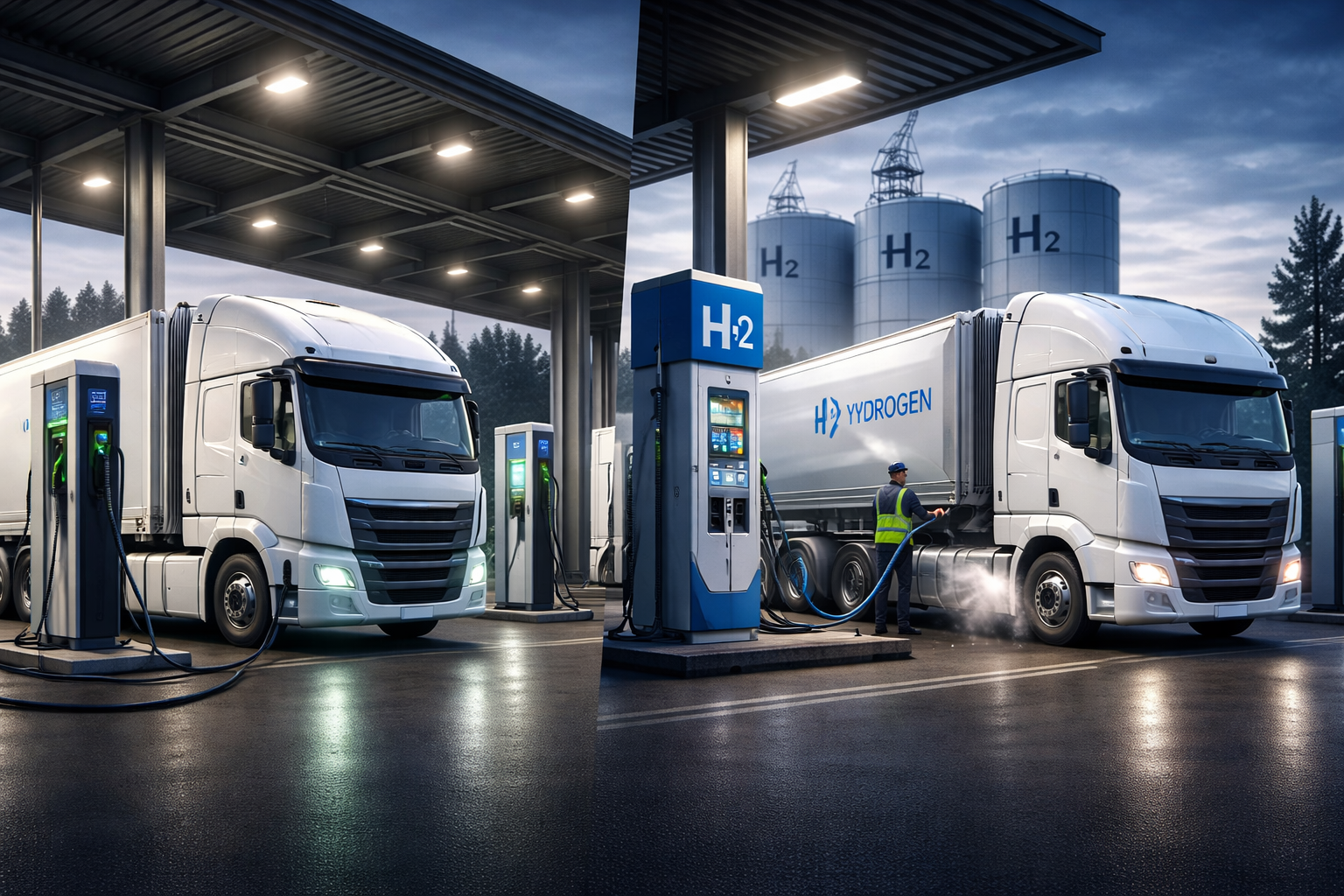
The hydrogen versus battery-electric debate is usually framed as a competition between technologies. That framing is wrong. Vehicles don’t operate in isolation; they sit inside a system made up of energy supply, infrastructure, operations and capital. Change any one of those variables and the outcome changes. What looks like a technology decision is usually a system constraint being misdiagnosed.
The real constraint is utilisation
Battery-electric trucks optimise around energy cost, while hydrogen trucks optimise around uptime. That distinction only matters when you look at how the asset is actually used. If a vehicle runs predictable routes, returns to base and can absorb charging time, battery-electric is structurally advantaged. If it is range-constrained, time-critical or running multiple shifts, downtime becomes more expensive than energy, and the economics shift in favour of hydrogen.
This is not about which technology is better. It is about which constraint dominates the operating model.
Most projects fail in the same place
On paper, both technologies can be made to work. In practice, projects stall because the system doesn’t line up. Demand isn’t contracted, infrastructure isn’t ready, energy supply isn’t secured, and capital is structured around assumptions rather than operating reality. The vehicle becomes the focal point because it is visible, but the failure sits elsewhere.
Infrastructure shifts the answer
Battery-electric systems are constrained by grid access, connection timelines and power availability, which are often slow-moving and outside the control of the project. Hydrogen systems are constrained by fuel production, distribution and delivery economics. These are different constraints, but they are equally real. In both cases, the viability of the vehicle is determined upstream.
Those constraints are increasingly shaped by underlying energy system realities, including UK wind curtailment costs and grid constraints, which are already feeding into electricity pricing and infrastructure decisions.
Ignoring that is how projects end up with the right technology and no way to deploy it.
There isn’t a single answer
Short-range urban fleets, fixed routes and depot-based operations tend to favour battery-electric. Long-haul, high-utilisation or time-sensitive operations tend to favour hydrogen. Many real-world fleets sit between those extremes, which is where most of the confusion—and most of the failed projects—sits. Trying to force a single technology across that range is what creates the false competition.
What actually deploys
The projects that move forward are not the ones with the best technology. They are the ones where the system is coherent. Demand is contracted, energy supply is secured, infrastructure is either in place or deliverable, and capital is structured around how the system actually behaves. Once those are aligned, the technology choice becomes obvious. Until they are, it doesn’t matter which vehicle you pick.
This is a system-level deployment decision within technology commercialisation. Infrastructure readiness is the controlling barrier because each drivetrain depends on a different upstream operating system: grid capacity and charging windows for batteries, or dependable fuel supply and station uptime for hydrogen. The commercially viable choice is the one whose full system can be delivered for the route and customer, not the one with the strongest standalone vehicle specification. Deployment evidence should therefore be gathered around workload, not technology preference.
Where this usually breaks
Most projects start with a vehicle and work outwards, which almost always fails. The correct sequence is the opposite: start with demand, then energy, then infrastructure, then capital, and only then the vehicle. If that sequence is wrong, the project won’t deploy.
If something isn’t moving
If a fleet or infrastructure project looks right on paper but isn’t progressing, the issue is usually structural rather than technical.