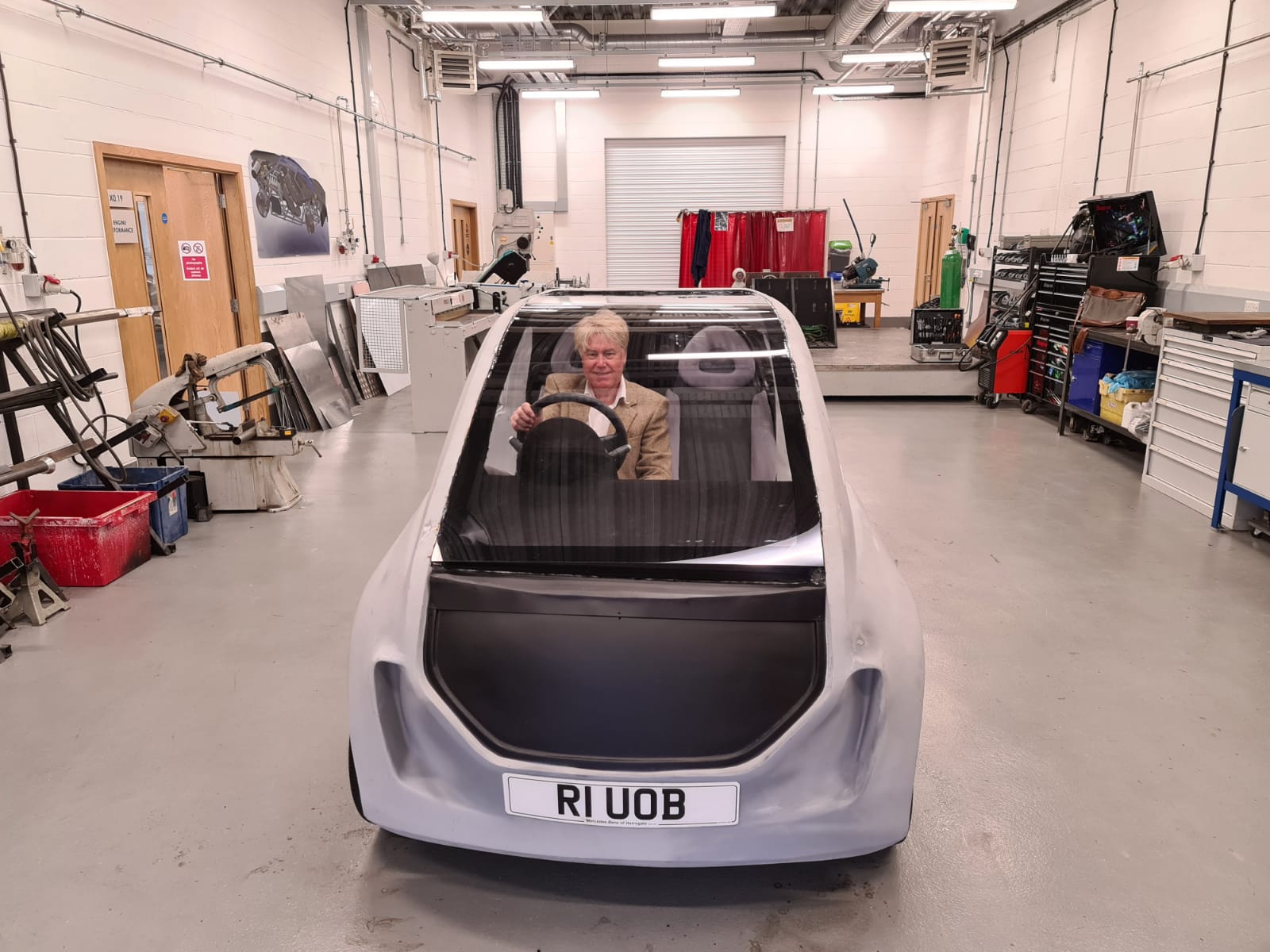
When picking up a book on Electron Microscopy recently an old photograph fell out, one taken some time in the late ‘80’s. It shows my Dutch registered company car, a 1.6 litre Renault 21 TL, a completely unremarkable vehicle except for the LPG tank in the boot.
As my job involved servicing large scientific instruments in semiconductor plants, R&D centres and Universities throughout the BeNeLux I clocked up a large enough mileage to make a LPG conversion viable. In the Netherlands at the time LPG was readily available in most service stations and cost a fraction of the price of petrol. There was apparently a performance deficit compared with petrol, but as my Renault had no performance to speak of it didn’t really matter.
Filling up was simply a matter of connecting a hose, locking it in place and pressing a button on a pump – something that felt very familiar when filling hydrogen trucks and buses.
The most remarkable aspect though was its dual fuel system. A dashboard switch toggled between LPG and petrol, and by filling both fuel tanks to the max a thousand kilometre range was achievable.
Looking at that photo now, what strikes me is not the car. It is how normal fuel switching once felt. No ideology, no tribal warfare between petrol and LPG evangalists, no endless nonsense about one perfect answer. Just a practical system using what was available, what was cheaper, and what got the job done.
We have been here before. The future of transport is rarely a single fuel. It is usually whatever works, scaled by infrastructure, economics and timing.