The Oil Shock That Won’t Accelerate the Energy Transition
Summary
The Iran war has triggered what the IEA calls the largest oil supply disruption in history, with the Strait of Hormuz effectively closed and global supply down roughly 8 million barrels per day. Past oil shocks in the 1970s and 2008 created surges of interest in renewable energy — but those technologies were immature, expensive, and unable to capitalise on the moment. This time, renewables are cheap, proven, and scaling fast. But that very maturity means a higher oil price won’t meaningfully accelerate their adoption. The binding constraints on the energy transition are now supply chain bottlenecks — sulphur, rare earths, and Chinese manufacturing dominance — not economics.
Key Takeaways
- Renewables have decoupled from oil prices. Solar and wind are already cheaper than new fossil plants in most markets. They were scaling at record pace before oil hit $100/barrel. The investment case doesn’t change at $70 or $100.
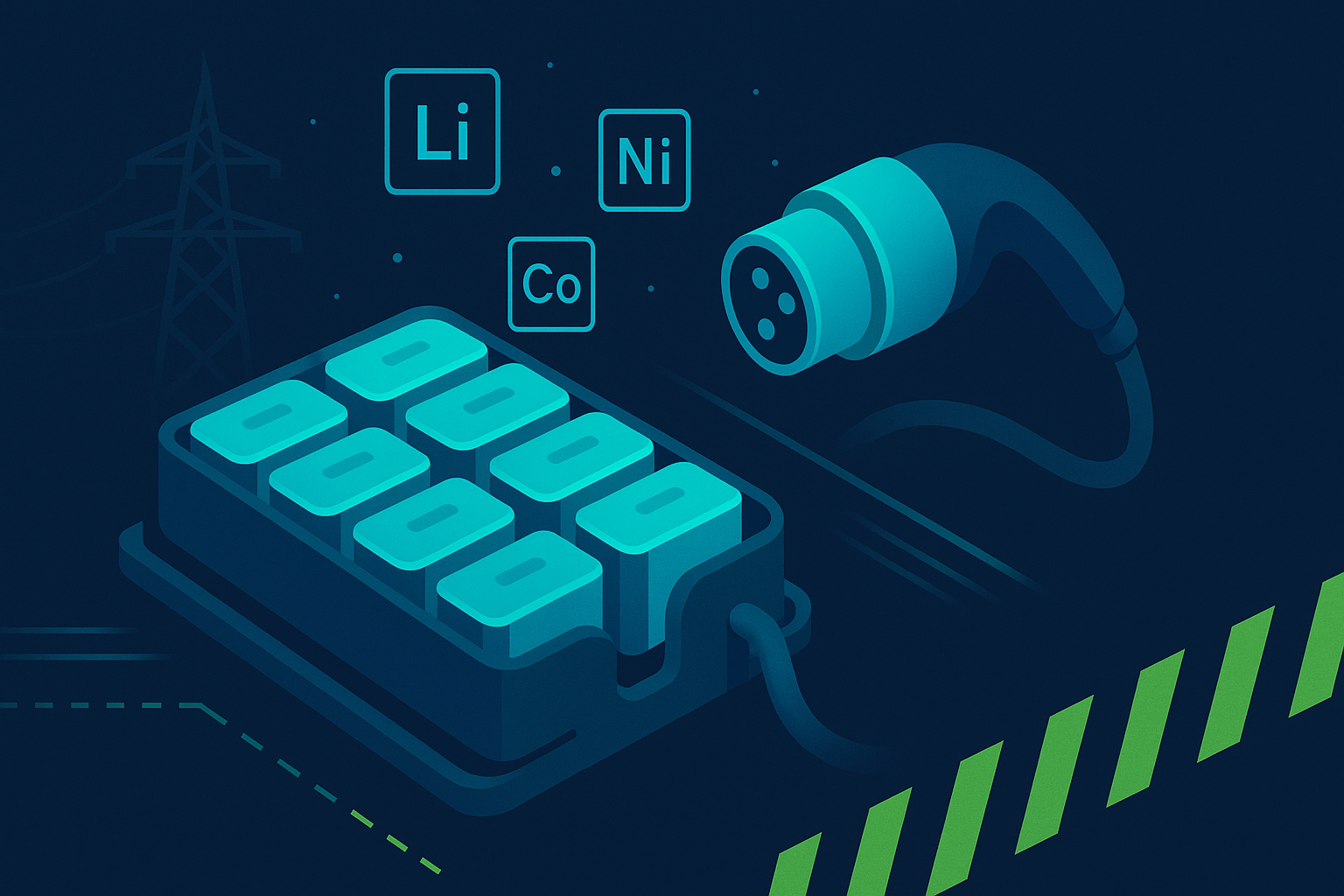
- Sulphur is the overlooked chokepoint. The Middle East accounts for 50% of seaborne sulphur trade. Sulphuric acid is essential for processing the nickel, copper, and cobalt that go into batteries and electrical infrastructure. You can’t build the alternative to oil without materials that depend on oil-region exports.
- China controls the renewable supply chain. 69% of EV batteries, 91% of rare earth refining, and six of the top ten wind turbine manufacturers. Western countries want to build domestic alternatives, but the timeline is measured in decades, not quarters.
- Higher oil prices may slow, not speed, the transition. Input cost inflation, recession risk, and fiscal reallocation toward consumer energy relief all work against faster renewable deployment.
- The energy transition is now supply-chain limited, not demand limited. Price signals can’t fix a rare earth mine that takes ten years to develop or a battery gigafactory that won’t be operational until 2029.
Analysis
There’s a familiar pattern in energy crises. Oil gets expensive, politicians rediscover renewables, money flows toward alternatives, and then — once the crisis passes — everyone goes back to what they were doing before. We saw it after 1973, again after 1979, and to a lesser extent after oil hit $147 in 2008.
The pattern always had the same structural explanation: renewable technologies weren’t ready. Solar panels in the 1970s were a science project. Wind turbines were unreliable and uneconomic. There was no grid-scale storage. No supply chain. No manufacturing base. When oil prices eventually fell, the economic case for these technologies collapsed because there was no underlying cost competitiveness to sustain them.
The 2026 Iran crisis is different — but not in the way most commentators seem to think.
The IEA has described this as “the largest oil supply disruption in history”. Brent crude surged from around $70 to nearly $100 a barrel in a matter of weeks. The Strait of Hormuz — through which about 20 million barrels per day normally transit — saw vessel traffic drop by roughly 90%. The IEA authorised a record release of 400 million barrels from strategic reserves. Middle East Gulf producers have seen output fall by 10 million barrels per day in March alone.
This is a genuine shock. But here’s what has changed since the last time this happened id that renewables don’t need expensive oil to be viable anymore.
Between 2010 and 2024, the cost of solar PV and onshore wind fell to levels below new fossil fuel plants in most countries. By 2024, 96% of new solar and onshore wind capacity was generating electricity more cheaply than new coal or gas — without subsidy. Renewables accounted for 92.5% of all new electricity capacity installed globally in 2024. EV sales hit 17 million units, representing more than 20% of global car sales. Global renewable capacity is projected to reach 3,610 GW in 2026.
This isn’t a sector dependent on an oil price signal. It us one that has already crossed the cost competitiveness threshold and is deploying at rates constrained by supply chains and permitting, not by economics.
And that’s the crucial point. If renewables were already being installed as fast as supply chains allow at $70 oil, then $100 oil doesn’t make them go faster. The bottleneck has moved somewhere else, but where?
Sulphur is problem that nobody is talking about
Everyone is focused on the oil price. But the more interesting — and more dangerous — disruption is to sulphur.
The Middle East accounts for about 24% of global sulphur production and a staggering 50% of seaborne sulphur trade. Sulphur is a byproduct of refining sour crude oil and processing sour gas. It’s the feedstock for sulphuric acid, which is one of the most important industrial chemicals on the planet.
That matters for the energy transition because sulphuric acid is essential for processing the very metals that go into batteries, electrical wiring, and renewable energy components.
Indonesia, which produces more than 50% of the world’s nickel — a critical battery material — imports roughly 75% of its sulphur from the Middle East. Some HPAL plants hold only one to two months of inventory. Africa’s copper belt imports about 2 million tonnes of sulphur a year, approximately 90% from the Middle East. The DRC, responsible for 70% of global mined cobalt, relies on the same supply chains.
China, the world’s largest consumer of sulphur, imports 47% of its supply, with over 55% of that coming from Persian Gulf nations. Sulphur prices had already risen 500% before the latest conflict. With only 1–1.5 months of port inventory and spring planting season creating competing demand from fertiliser producers, the squeeze is real and immediate.
This creates what I’d call a “byproduct trap.” Sulphur supply responds to hydrocarbon production levels, not to downstream demand signals from the battery or mining industries. When oil production gets curtailed in the Gulf, sulphur output falls with it. You can’t order more. Alternative flows from Canada take time to redirect. The market seizes up.
The implication for renewables is direct: even if high oil prices make batteries and EVs more economically attractive, the physical ability to process the nickel, copper, and cobalt that go into them is constrained by the same conflict that’s pushing oil prices up. The crisis that makes the alternative more desirable simultaneously makes it harder to manufacture.
Rare earths: a chokepoint by design
The sulphur shortage is a crisis of geography and conflict, but the rare earth shortage is a crisis of strategic design.
China accounts for 61% of global rare earth mining and 91% of refining and processing. For heavy rare earth elements — the ones that go into high-performance magnets for EV motors and wind turbines — China holds what Japan’s embassy in Washington described as “almost 100% competitive edge.”
In April 2025, China imposed export restrictions on seven rare earth elements. While some easing followed diplomatic pressure, the licensing regime remains in place and continues to constrain supply. Chinese refined rare earth compounds remain five to six times cheaper than Western equivalents.
The timeline for Western catch-up is brutal. Mine development takes 7–10 years from discovery to production. Refining capacity takes 5–7 years. Magnet manufacturing needs 3–5 years to reach commercial scale. The US produces roughly 46,000 tonnes of rare earth oxide annually. China produces 270,000 tonnes. The IEA projects that by 2030 China will still control 51% of production and 76% of refining.
Higher oil prices don’t change this timeline. You can’t accelerate a rare earth mine through the permitting process by making diesel more expensive.
Batteries, motors, turbines: the manufacturing gap
The scale of Chinese dominance in clean energy manufacturing is difficult to overstate.
In EV batteries, six Chinese manufacturers controlled 68.9% of global installations through October 2025. CATL alone holds 38.1% of the global market. BNEF reported that China’s battery production capacity roughly equals total global demand. Chinese plants are running at about 50% utilisation — there’s overcapacity, but it’s in China, not where Western policymakers want it.
Europe and the US each have roughly 200 GWh of operational battery cell manufacturing capacity. China has over 2,200 GWh. Europe imports $35 billion worth of batteries annually while exporting only $9 billion. The collapse of Northvolt — Europe’s biggest homegrown battery hope — into bankruptcy in 2024 was a sobering reminder of how hard it is to compete with established Chinese cost structures.
In wind turbines, Chinese manufacturers took all four top spots globally for the first time in 2024. China installed roughly 80 GW of onshore wind — 70% of the global total. It plans to double that to 120 GW annually between 2026 and 2030. Chinese turbines sell overseas for 20% less than US or European equivalents. The cost gap in offshore wind is even wider: $1,520 per kilowatt in China versus $3,389 in Europe.
Meanwhile, US wind installations fell for a fourth consecutive year to just 5.4 GW in 2024 — the lowest in a decade. Turbine delivery lead times nearly doubled. Transformer shortages persist.
The uncomfortable reality: even where Chinese firms set up European factories — like Mingyang’s planned £1.5 billion factory in Scotland — they’ll be shipping gearboxes, bearings, and core components from China. China manufactures 70% of global supply for these parts. The “European-made” turbine is still fundamentally a Chinese supply chain product.
Why doesn’t a higher oil price accelerate renewable adoption?
Because the constraints have shifted. In the 1970s and 2008, the constraint was cost competitiveness. High oil prices closed that gap — temporarily. When oil fell, the gap reopened and investment dried up.
In 2026, cost competitiveness has already been achieved. Renewables are being deployed at rates determined by supply chain capacity for batteries, turbines, and components; by rare earth and critical mineral availability; by permitting and grid connection timelines; and by manufacturing scale — which is overwhelmingly in China.
None of these constraints respond to oil prices. You can’t make lithium refineries process faster because Brent is at $100. You can’t make a German offshore wind farm connect to the grid sooner because diesel costs more. You can’t make China export more rare earth magnets because the economics look better.
If anything, higher oil prices create headwinds: input cost inflation for steel, concrete, and shipping; recession-driven demand destruction that reduces electricity consumption and investment appetite; political pressure to prioritise consumer relief over long-term energy transition spending.
What is the industry getting wrong?
Two things.
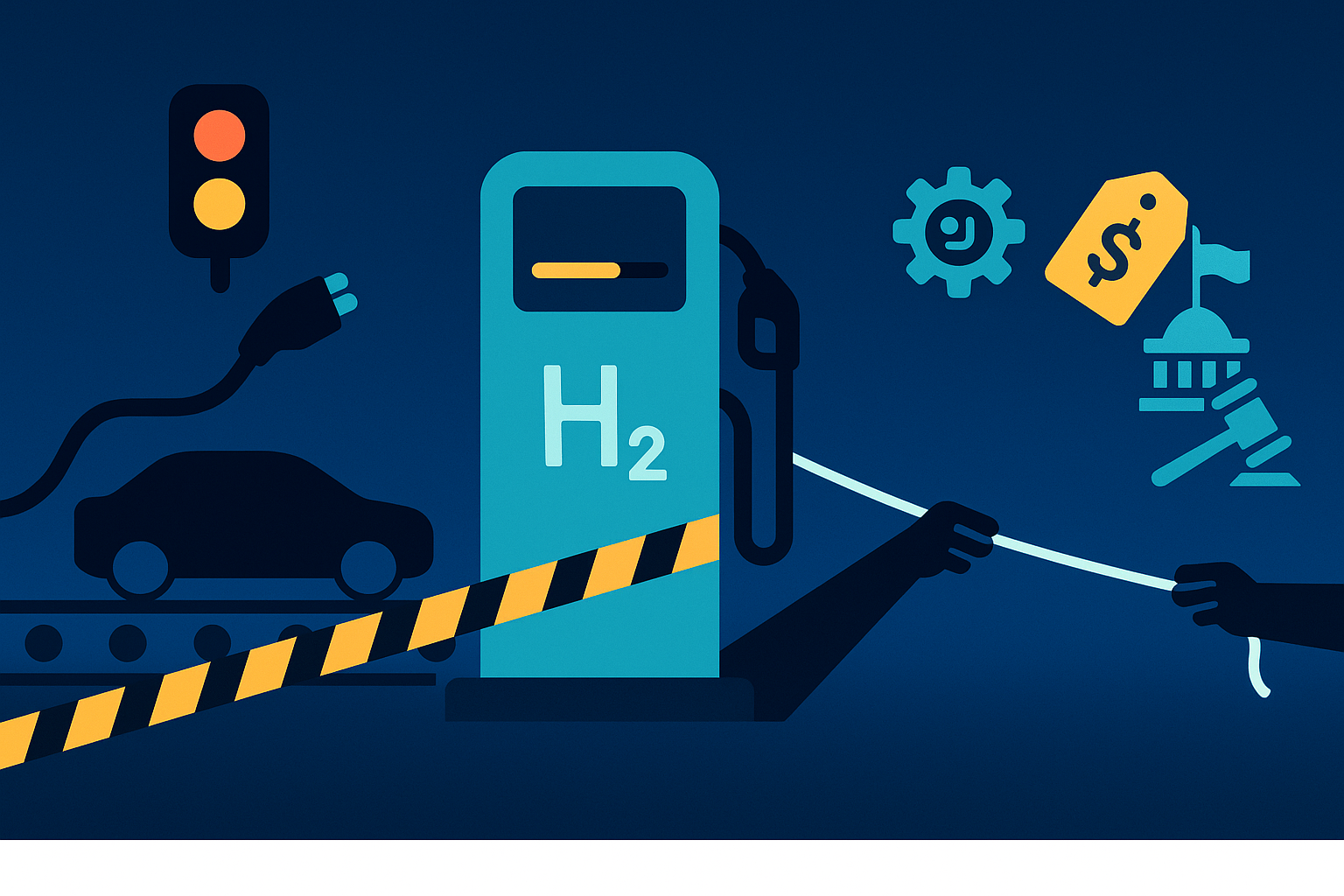
First, there’s a persistent assumption that high fossil fuel prices are good for renewables. That was true when the competition was about cost. It’s no longer true when the competition is about supply chain throughput. The binding constraint has moved, and most analysis hasn’t caught up.
Second, there’s a failure to recognise the “byproduct trap” — the way oil supply chains and renewable supply chains are physically connected through materials like sulphur. Cutting oil production doesn’t just raise the price of the thing you want to replace. It cuts the supply of industrial chemicals needed to manufacture the replacement. The energy system is more interconnected than most transition narratives acknowledge.
The sulphur-nickel-battery chain is a particularly stark example. Indonesia processes more than 50% of the world’s nickel. That processing requires vast quantities of sulphuric acid. That acid comes from sulphur. That sulphur comes from oil refining in the Gulf. Close the Strait of Hormuz, and you don’t just lose oil. You lose batteries.
What are the real constraints on faster deployment?
There are three, in order of difficulty:
- Critical minerals processing. Not just mining — processing and refining. China dominates this because it invested over decades while the West outsourced. Catching up requires not just capital but time, permitting, environmental management, and workforce development. Minimum timeline: 5–10 years.
- Manufacturing scale. Battery gigafactories, turbine component plants, and magnet production facilities take years to build and commission, and then years more to optimise yields and costs. Chinese manufacturers have a 15–20 year head start in learning curve advantages.
- Geopolitical access. Western countries simultaneously want to reduce dependence on China and accelerate the energy transition. These goals are in tension. Trade barriers, tariffs, and local content requirements limit access to the cheapest, most available components. But removing those barriers creates strategic dependency. There is no clean answer.
Implications
For entrepreneurs and developers: Don’t assume the oil price shock will unlock new demand for your renewable project. The demand was already there. Focus instead on solving supply chain constraints — sourcing, logistics, component availability, grid connection. The companies that thrive in this period will be those that can navigate bottlenecks, not those that wait for better economics.
For investors: The risk in renewable energy is no longer technology risk or demand risk. It’s supply chain risk and execution risk. Evaluate companies based on their access to critical materials, their exposure to Chinese supply chain dependency, and their ability to secure components in a constrained market. Companies with vertically integrated or diversified supply chains will outperform.
For policymakers: Stop framing the energy transition as a demand-side problem. It’s a supply-side problem. The policy priority should be accelerating domestic processing capacity for critical minerals, strategic stockpiling of materials like sulphur and rare earths, and realistic — not aspirational — timelines for supply chain localisation. Permitting reform for mines and processing facilities matters more right now than additional renewable energy targets.
For the hydrogen sector: This analysis reinforces the value proposition of hydrogen as a complementary pathway, particularly in transport and industrial applications where battery supply chains are most constrained. But hydrogen infrastructure faces its own supply chain challenges — electrolysers require iridium, platinum group metals, and specialised steel. The same bottleneck logic applies.
Closing Insight
The 1973 oil shock happened when renewables were a dream. The 2008 shock happened when they were a promise. The 2026 shock is happening when they’re a reality — but a reality constrained by the same kind of chokepoints that make oil vulnerable.
We solved the technology problem. We solved the cost problem. What we haven’t solved is the industrial supply chain problem — and you can’t fix that with a higher oil price.
The energy transition has moved from the era of “can we build it?” to the era of “can we build it fast enough, with materials we can actually access?” That’s a fundamentally different challenge, and it requires fundamentally different thinking.
Sources & Further Reading
- Reuters — World faces largest-ever oil supply disruption on Middle East war, IEA says
- The Oregon Group — Strait of Hormuz is also the chokepoint for sulphuric acid and critical metal processing
- Intellinews — Iran war sulphur shortage will have a worldwide impact
- AgroLatam — Iran war disrupts sulphur supplies to China, raising global fertilizer concerns
- S&P Global — Rare earth supply bottlenecks set to persist in 2026
- China Briefing — China’s Rare Earth Elements: What Businesses Need to Know
- Global Finance — Breaking China’s Grip on Rare-Earth Elements
- Carbon Credits — China Now Controls 69% of the Global EV Battery Market
- BNEF — China Already Makes as Many Batteries as the Entire World Wants
- Bruegel — Transatlantic clean investment monitor: battery manufacturing
- BNEF — Chinese Manufacturers Lead Global Wind Turbine Installations
- Energies Media — China to add 120 GW of new wind capacity annually starting in 2026
- Eco-Business — China’s offshore wind companies seek a Europe foothold