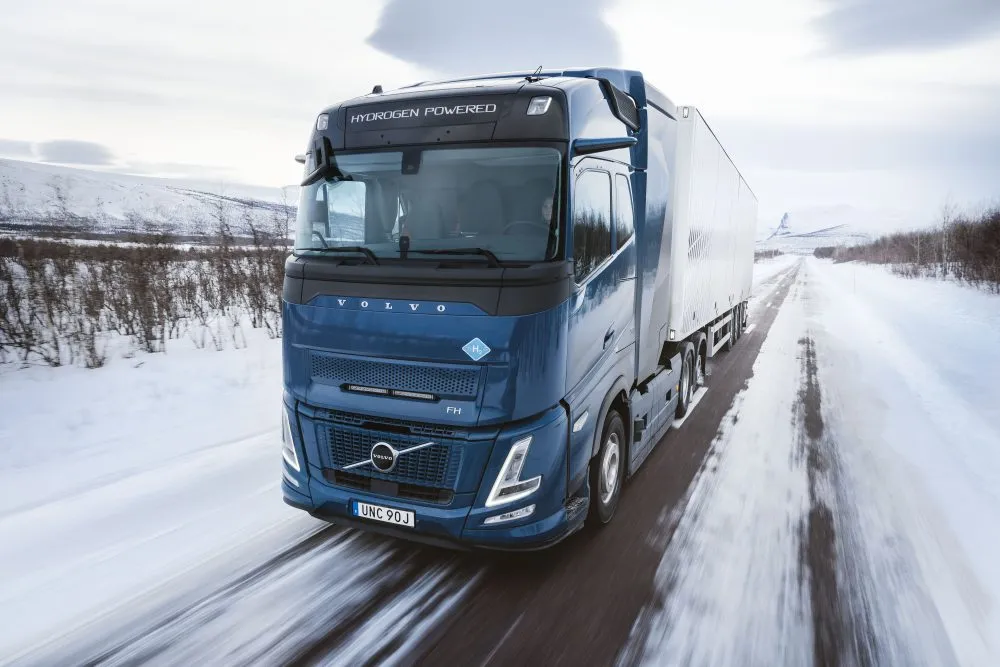
Volvo hydrogen truck testing shows where freight decarbonisation is really heading
Volvo has begun testing a Volvo hydrogen truck powered by a hydrogen combustion engine on public roads, and that makes this more than another product update. It is a signal about how the sector is actually moving.
For the past decade, the debate has been framed around which drivetrain wins. Battery electric or hydrogen fuel cell. That framing is starting to break down. The constraint is no longer whether the technology works. It is whether it can be deployed at scale, inside real fleets, under real operating conditions.
The constraint in freight is no longer technology. It is execution.
That is where the Volvo hydrogen truck becomes interesting. Not because it is the most efficient solution, but because it fits into a system that already exists.
Volvo is not choosing. It is building optionality.
Hydrogen combustion is not new. What is new is the context in which it is being taken seriously again. Internal combustion engines still underpin global freight, from manufacturing through to servicing and fleet operations. Volvo is not trying to replace that system outright. It is adapting it.
The Volvo hydrogen truck retains much of the existing architecture while changing the fuel. That reduces the number of moving parts in the transition. Operators are not being asked to relearn everything. Service networks do not need to be rebuilt from scratch. The risk profile is lower.
At the same time, Volvo is not walking away from fuel cells. Through cellcentric, its joint venture with Daimler, it is actively developing hydrogen fuel cell systems as a parallel pathway. That dual-track approach matters.
I covered this dynamic in more detail when Toyota joined cellcentric. What that move really signalled was not just another partnership, but a consolidation of capital, engineering capability and real-world experience around fuel cells.
Taken together, these moves point to a clear strategy. Volvo is not betting on a single outcome. It is positioning itself across both hydrogen pathways—combustion and fuel cell—while the market works out where each one fits.
→ Compare where this actually competes:
hydrogen vs electric trucks
Hydrogen ICE in practice
Volvo’s hydrogen combustion work shows the practical appeal of H2ICE: reuse of existing engine architecture, familiar maintenance models, and faster deployment pathways. The constraint is not whether it works — it is where it competes against battery-electric and fuel cell alternatives in real duty cycles.
Hydrogen combustion is about deployment, not efficiency
Fuel cells are more efficient. That is not in dispute. But efficiency is only one variable, and often not the one that determines adoption.
What matters is whether a vehicle can operate predictably inside existing logistics systems. Refuelling, maintenance, downtime and asset utilisation tend to dominate the decision-making process. The Volvo hydrogen truck aligns more closely with those factors than a clean-sheet technology shift.
It offers a way to introduce hydrogen without requiring the entire ecosystem to mature simultaneously. Vehicles, infrastructure, supply chains and financing models do not all need to move at the same pace.
Hydrogen ICE in practice
Volvo’s hydrogen combustion approach illustrates the key trade-off: retaining existing engine architecture while shifting fuel. The question is not whether it works — it’s where it actually makes sense operationally.
Where the Volvo hydrogen truck fits
This is not a universal solution. The role of the Volvo hydrogen truck is likely to be concentrated in long-haul and high-utilisation segments, where downtime carries a direct cost and charging constraints become harder to absorb.
Battery electric trucks will continue to dominate where routes are predictable and charging can be managed. Fuel cells may emerge as the preferred option where efficiency and zero tailpipe emissions justify the added complexity. Hydrogen combustion sits between the two, offering a pathway that is less disruptive and easier to deploy in the near term.
This is what a transition actually looks like in a capital-intensive sector. Not a single winner, but a set of overlapping solutions, each shaped by the constraints around them.
Related: A deeper breakdown of where hydrogen combustion works, and how it compares with fuel cells and BEVs:
The significance of the Volvo hydrogen truck is not that it represents the end state of zero-emission freight. It is that it reflects how the market is solving for deployment under real constraints.
Volvo’s strategy makes that explicit. Develop fuel cells for where efficiency and scale justify it. Develop combustion for where speed, familiarity and lower risk drive adoption.
That is not indecision. It is how industrial transitions are managed.
Source:
Auto Tech News