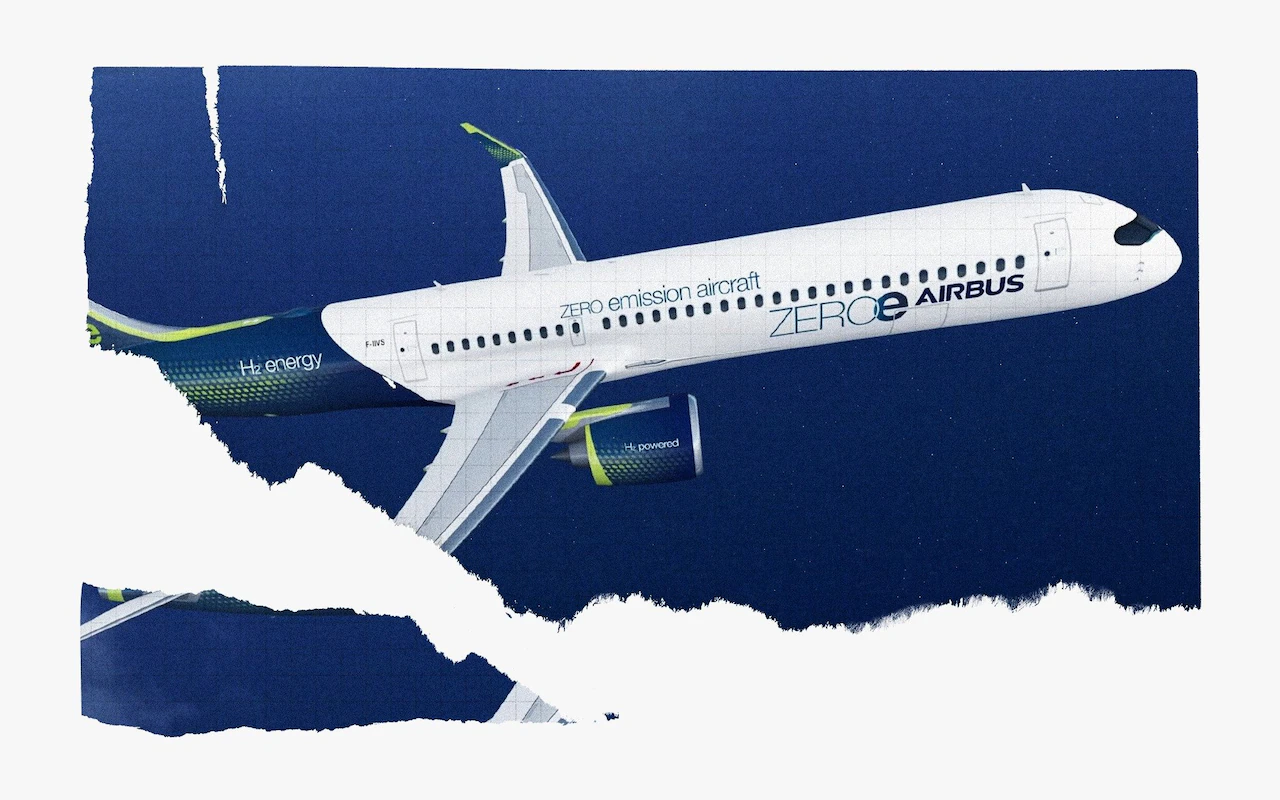
Sweden’s leading eMethanol developer raised €64 million from the hydrogen A-list, filed an environmental permit one week before declaring bankruptcy, and still ran out of cash. This is not a story about bad technology. It is a story about who carries commercial risk in first-mover energy markets.
Summary
Liquid Wind AB, the Swedish eMethanol project developer, was declared bankrupt on 11 May 2026, just seven days after submitting an environmental permit application for a new 100,000-tonne facility. The company raised over €64 million from Alfa Laval, Siemens Energy, Uniper, Topsoe, Carbon Clean, Samsung Ventures, and HYCAP before exhausting its cash, as noted by Michael Liebreich.
The proximate cause was the 2024 cancellation of FlagshipONE by Ørsted, the company’s reference project, following Ørsted’s failure to secure viable long-term offtake contracts for eMethanol. The deeper cause was structural: project developers in first-mover clean fuel markets bear commercial risk that neither offtakers nor project finance providers are yet willing to carry.
Key Takeaways
- €64M raised from institutional-grade strategic investors and the company still went bankrupt, the problem was structural, not financial incompetence, according to Liebreich’s summary.
- FlagshipONE was cancelled by Ørsted in August 2024 when long-term offtake at viable prices proved impossible to secure. Ørsted took a DKK 1.5bn impairment, as reported by the Maritime Executive.
- E-methanol costs 2–3 times more than conventional marine bunker fuel, as discussed in this industry analysis.
- A permit application was filed on 4 May 2026, seven days before the bankruptcy declaration, according to QC Intelligence.
- Subsidiaries in Sweden, Denmark, and Finland are now up for sale, also reported by QC Intelligence.
Total raised | Founded | FlagshipONE impairment | Projects developed | eMethanol cost premium |
This is the second time in a month
If you followed the pre-pack collapse of HVS, Glasgow’s hydrogen truck developer, whose £25M in debt resolved in a £145,000 asset sale reported by Scottish Financial News, Liquid Wind will feel familiar. Different sector, different country, the same structural failure: a first-mover technology company building against a commercial assumption, captive demand, contracted offtake, regulatory tailwinds, that never fully materialised in the timeframe the fundraising required. These are not isolated incidents. They are the pattern.
Liquid Wind was founded in 2017 by Claes Fredriksson in Gothenburg. The concept was coherent: build standardised, modular eMethanol facilities co-located with biomass-fired combined heat and power plants, using biogenic CO2 and renewable electricity to produce methanol via green hydrogen synthesis, as described in coverage from Splash247. Each facility was designed to produce approximately 100,000 tonnes of eMethanol per year while capturing around 150,000 tonnes of CO2. Shipping was the target market. Methanol requires modest vessel modifications compared to ammonia or liquid hydrogen, and bunkering infrastructure already existed in Nordic ports.
The funding sequence looked exemplary. Series A of €4M in 2021 attracted Alfa Laval, Carbon Clean, Siemens Energy, Topsoe, and Uniper, according to Liquid Wind’s 2021 announcement. Series B of €15.2M followed in late 2022 with HYCAP joining, according to the Series B announcement. Then in November 2024, a €44M Series C, described at the time as one of the largest eFuels rounds in Europe that year, brought in Samsung Ventures, according to the Series C release. Six months later, the company was insolvent.
Timeline
- 2017: Liquid Wind founded in Gothenburg by Claes Fredriksson.
- May 2021: Series A, €4M.
- December 2022: Series B, €15.2M, and FlagshipONE transfers to full Ørsted ownership at final investment decision.
- May 2023: Ørsted breaks ground on FlagshipONE in Örnsköldsvik.
- August 2024: Ørsted cancels FlagshipONE and takes a DKK 1.5bn impairment, according to the Maritime Executive.
- November 2024: Series C, €44M.
- February 2025: Liquid Wind picks up the abandoned FlagshipONE site and plans to redevelop at doubled capacity, according to Seatrade Maritime.
- 4 May 2026: Environmental permit application filed for a 100,000-tonne eFuel facility in Örnsköldsvik.
- 11 May 2026: Liquid Wind AB declared bankrupt.
Why the permit timing matters
Much of the early commentary on the Liquid Wind bankruptcy has focused on the Series C: €44M raised in November 2024, company bankrupt by May 2026, six months later. The implicit question is what happened to the money.
The more revealing detail is the permit. Liquid Wind submitted an environmental permit application for a large-scale eFuel facility in Örnsköldsvik on 4 May 2026, a complex, resource-intensive regulatory document that requires significant technical and legal preparation, according to QC Intelligence. Seven days later, the company was insolvent. This is not the behaviour of a company gradually winding down. It is the behaviour of a company operating at full capacity, still building commercial optionality for a future owner, right up to the point the cash floor arrived.
Project developers are permanently in this position. Revenue only materialises at financial close, the point at which a project moves from development to construction. Financial close requires project finance. Project finance requires offtake contracts. Offtake contracts require buyers willing to pay a price that makes the project economics work. In eMethanol, that price was not available in the Nordic market at the scale required.
“Filing a permit one week before declaring bankruptcy is not evidence of delusion. It is evidence of a company working to the last moment to create optionality that someone else could monetise.”
What killed FlagshipONE
The proximate cause of Liquid Wind’s commercial failure was Ørsted’s decision in August 2024 to cancel FlagshipONE. Ørsted cited slower-than-expected demand growth for e-methanol in shipping and an inability to sign long-term offtake contracts at prices that made the project viable, according to the Maritime Executive. The company took a DKK 1.5 billion impairment, the project had absorbed enormous capital and produced no built facility.
Liquid Wind had sold FlagshipONE to Ørsted in December 2022, transferring full ownership at final investment decision, according to Liquid Wind’s announcement. This is the standard project developer model: develop to FID, sell to a utility or infrastructure investor who takes it to construction, collect a developer return, and reinvest in the pipeline. In this case, the return was modest and the reference project, the proof of concept underpinning all subsequent fundraising and pipeline development, was cancelled two years later by the acquirer.
Liquid Wind then attempted to restart. In February 2025, the company announced it had picked up the abandoned FlagshipONE site and planned to redevelop it at doubled capacity, according to Seatrade Maritime. The May 2026 permit application was the output of that restart effort. The pivot ran out of cash before it could produce a financial close.
The offtake problem has not been solved
E-methanol currently costs 2 to 3 times more than conventional fossil marine fuel, according to this industry analysis. That gap exists because green hydrogen production, the dominant cost component, remains expensive relative to fossil alternatives, with CO2 sourcing, synthesis, and distribution each adding cost on top. The cost curves are declining, but not fast enough for most shipping companies to sign bankable long-term contracts at today’s prices.
Maersk, the most visible exception, signed a 500,000-tonne annual offtake agreement in November 2023, but with a Chinese developer, at pricing that reflected a dominant buyer’s negotiating position, and for volumes driven by Maersk’s own fleet conversion programme. European eMethanol developers, including Liquid Wind, could not replicate that structure in the Nordic market. Shipping companies expressed interest. Interest did not convert to contracted volume at a price that cleared the project finance hurdle.
The regulatory framework was supposed to force the issue. FuelEU Maritime and the IMO’s revised GHG strategy introduce escalating penalties from 2025 onwards. But compliance mechanisms, LNG switching, operational efficiency, carbon offsets, give most shipowners enough flexibility to meet near-term targets without committing to green fuel volumes at a premium that makes greenfield projects work. The regulatory floor was set below the price needed. As I examined in The State of UK Hydrogen, the same demand-side policy gap is visible across European jurisdictions.
The developer equity trap
Liquid Wind illustrates precisely the structural position I have written about in earlier analyses of the 2024 to 2025 green hydrogen project failures: the developer equity trap. Project developers bear all pre-FID commercial risk, site, permitting, engineering, partnership, regulatory, that neither offtakers, project finance providers, nor strategic investors are willing to price into their own positions.
Consider the investor roster. Alfa Laval, Siemens Energy, Uniper, Topsoe, these are not speculative venture capitalists, but industrial companies with direct commercial interests in eMethanol technology deployment. Their participation signalled genuine intent to be part of the supply chain. It did not constitute a commercial commitment to purchase eMethanol at a price that worked. Samsung Ventures joining the Series C added financial credibility. It did not add an offtaker.
The €64M was almost entirely spent on pre-development work across six potential Nordic sites, site selection, permitting, engineering studies, feasibility analyses, partnership development, and regulatory infrastructure, as summarised by Splash247. None of that work is wasted. Permits, site agreements, technical designs, and regulatory relationships all transfer to any acquirer. But none of it generates revenue until financial close, and financial close was the thing that kept not happening.
What the industry keeps getting wrong
The prevailing framing in the green hydrogen and eFuels sector since roughly 2020 has been that demand is forming, policy is tightening, and the constraint is build speed and capital deployment. That framing encouraged raising developer equity against the assumption that the commercial question was largely answered.
Close to 60 major green hydrogen projects were cancelled in 2025 alone, representing approximately 4.9 million tonnes per year of planned capacity, according to Decarbonize Weekly. The pattern across those failures is nearly identical to Liquid Wind’s: projects targeting open or export markets, with offtake assumed rather than contracted. Liquid Wind’s model was more conservative than many, co-located with existing industrial CO2 sources, modular in design, focused on a genuinely hard-to-abate sector. And it hit the same wall. The offtake problem is not a matter of project design. It is a market structure problem that project developers cannot solve alone.
Implications
For entrepreneurs and project developers
The business model of equity-funded project development against speculative future offtake is fragile at any raise size. Developers who have survived are those who built with a captive industrial buyer anchoring offtake from day one, not those who built the project and then searched for buyers. Modular, standardised development is smart engineering. It requires a scalable commercial mechanism that was not in place at financial close.
For investors
€64M raised from credible strategic investors is not sufficient validation that a business model is commercially ready. The November 2024 Series C was described as one of Europe’s largest eFuels raises. By May 2026, the company was insolvent. Due diligence on eFuel project developers must interrogate the offtake structure, not just the technology and team.
For policymakers
The FlagshipONE to Ørsted to Liquid Wind chain shows what weak demand-side policy does to first-mover project developers. EU funding was anticipated, Swedish government grants were expected, Horizon Europe participation was planned, but all of it was conditional on a project that was conditional on offtake that never materialised. Demand-side instruments with teeth, fuel mandates, contracts for difference for green shipping fuel, blended finance structures that absorb offtake risk, are the missing layer.
What happens to the assets
The subsidiaries in Sweden, Denmark, and Finland are now up for sale, according to QC Intelligence. The pipeline, including the freshly filed Örnsköldsvik permit, the Naantali partnership in Finland, and earlier site work in Sundsvall and Umeå, represents nine years of development that does not disappear with the bankruptcy declaration. Permits, site agreements, industrial partnerships, and regulatory relationships all transfer. A better-capitalised acquirer with contracted demand from day one could build these projects. The question is whether the market has learned enough from the failure to structure them differently.
This follows a now familiar pattern. HVS’s Glasgow hydrogen truck operation absorbed tens of millions in development cost and resolved in a £145,000 pre-pack asset sale. The technology was real. The commercial structure around it was not. Liquid Wind’s eMethanol sites are real. The commercial structure around them was not. The assets may yet be built, but they will be built by someone who solved the offtake problem first.
Closing Insight
Liquid Wind did not fail because the technology was wrong or the team was incompetent. It failed because it was a project developer trying to carry commercial risk that the market had not yet decided to price. The assets may yet be built, but they will be built by someone who solved the offtake problem before breaking ground.