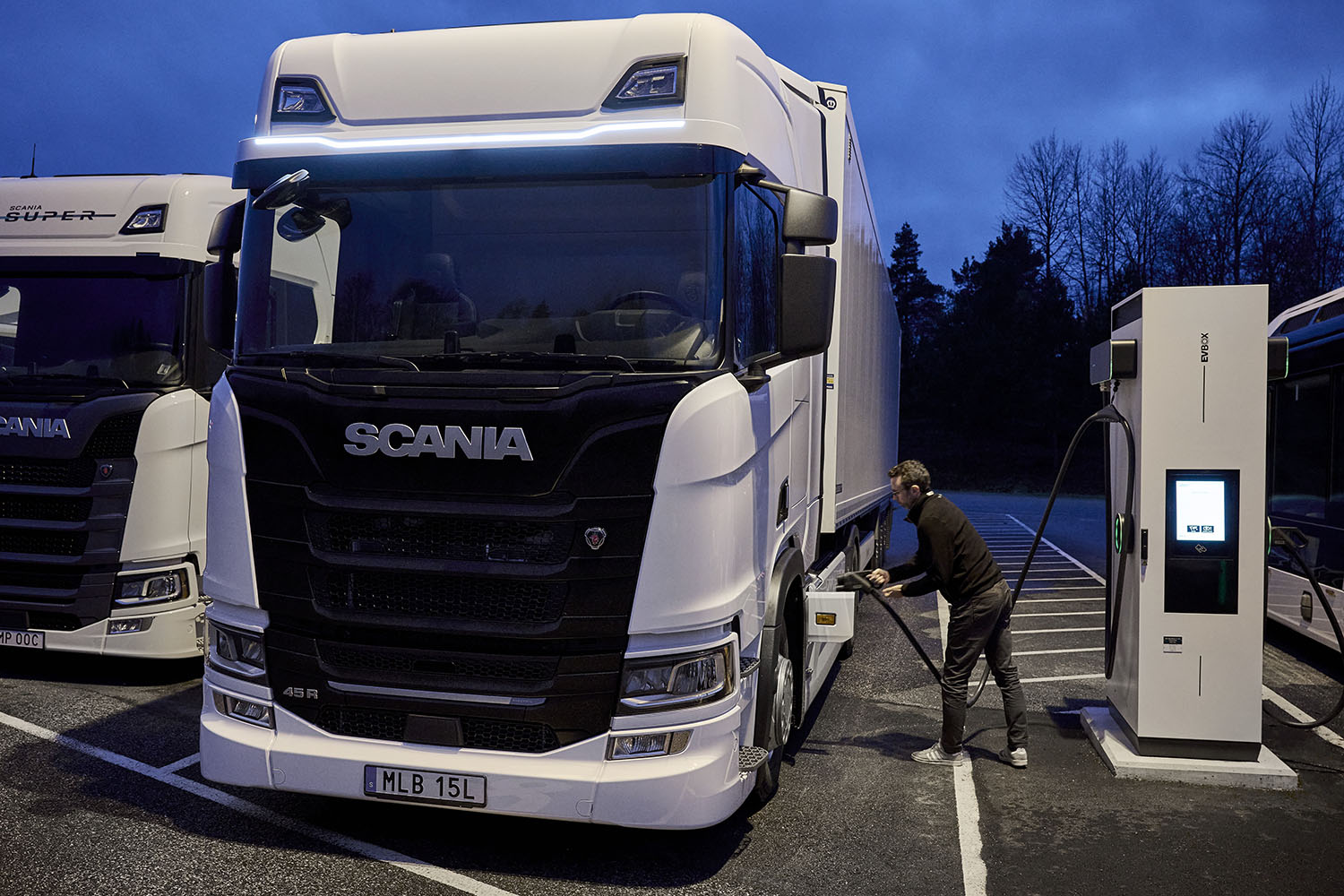
Field Note — 26 March 2026
UK Zero Emission HGV Funding: £1bn, But Read the Small Print
On 25 March 2026, the UK government announced a
£1 billion package combining Zero Emissions Truck and Van grants with a £170 million Depot Charging Scheme, targeting upfront vehicle costs and depot charging access. The headline is more coherent than most UK transport decarbonisation funding. But the structural gap it leaves — grid connection — sits entirely outside the envelope, and the policy is electric-only, with no hydrogen component.
Key Takeaways
- The £1bn covers vehicle grants — up to £81,000 off the heaviest zero emission truck (up to 40% of cost) and up to £5,000 off zero emission vans — plus £170m for depot charging infrastructure
- The Depot Charging Scheme covers up to 70% of charging infrastructure costs, capped at £1 million per business or public authority
- This is an electric-only package — no hydrogen refuelling infrastructure is included in this announcement
- Grid connections, reinforcement costs, and DNO queue delays are not addressed — these remain entirely with the operator
- To understand where battery electric actually starts to beat diesel on total cost, the numbers depend heavily on your duty cycle and grid situation — run the numbers in the fleet TCO calculator
What the Package Actually Does
The structure here is more coherent than most UK transport decarbonisation funding. Rather than spreading money across a wide range of demonstration projects and competitive pots, it targets two specific friction points: the vehicle purchase premium and the depot charging capex gap. The Depot Charging Scheme at 70% cost coverage, to a £1 million ceiling, is genuinely useful for mid-to-large fleet operators with existing depot ownership and adequate grid capacity.
The truck grant figures are substantial on paper. Up to £81,000 off the heaviest zero emission trucks, covering up to 40% of eligible costs. The internal maths implies an eligible cost ceiling of around £202,500 — but current market pricing for 44-tonne battery electric tractor units runs higher than that in practice. The Volvo FH Aero Electric, for example, is priced from around £221,000, and specifications with higher battery capacity push well above that. In real terms, the £81,000 grant likely covers 30–37% of what most operators will actually pay for the heaviest trucks — meaningful, but not the full 40% the headline suggests for top-spec vehicles. Companies like Wren Kitchens and M&S are cited as early adopters, and both represent the ideal operator profile: large, logistics-intensive businesses with the procurement infrastructure to absorb execution complexity.
The announcement also frames the switch as a fuel cost resilience play as much as a decarbonisation one. That framing is deliberate — it speaks to operators worried about diesel cost volatility rather than those ideologically committed to net zero. It is a more commercially grounded pitch than previous iterations of HGV decarbonisation policy, and it may be more effective for that reason. Whether it actually pencils out depends on your specific fleet profile — the diesel vs BEV vs hydrogen break-even analysis
is worth working through before committing.
The Constraint This Package Doesn’t Touch
The Depot Charging Scheme will fund up to 70% of charger and installation costs. It will not fund the DNO connection upgrade that may be required before a single charger can be energised. For a depot requiring significant power upgrades — common for anything beyond a small van fleet — that connection sits in a queue. Ofgem has been reforming the connections process, but the physical constraint remains real in 2026: 12–36 month connection timelines and six-to-seven-figure reinforcement costs that sit entirely with the operator.
This is the part the policy quietly steps around. You can subsidise the vehicle and partially fund the charger. But if the grid cannot deliver the power, neither investment deploys. That is not a niche problem for a handful of large depots — it is the execution reality for a significant portion of the fleet operators this package is trying to reach. The operational challenges facing electric HGVs go well beyond purchase price.
Hydrogen is absent from this specific package. That does not mean it is off the table in UK transport policy more broadly, but it confirms that near-term government capital is flowing to battery electric. The practical hedge value of hydrogen for operators with grid constraints remains real: refuelling infrastructure does not require DNO queue involvement in the same way. The full hidden cost comparison between battery and hydrogen trucks explains why serious fleet operators in long-haul and high-utilisation duty cycles are watching both. The Fleet TCO tool lets you model this directly against your own duty cycle assumptions.
The Approved Vehicle Framework and Chinese OEMs
Grants apply to type-approved vehicles meeting UK standards . That technically includes Chinese OEMs already operating within UK subsidy frameworks — Yutong, for example, has operated in the bus sector under equivalent schemes for years. The eligibility criteria perform two functions simultaneously: quality filtering (ensuring vehicles are homologated, supported, and serviceable in the UK market) and quiet political gatekeeping.
The direction of travel on Chinese supply chain scrutiny — battery origin declarations, connected vehicle data, strategic dependency — is separate from this announcement but operates on the same eligibility infrastructure. Expect tightening to manifest not as a clean ban but as a gradual accumulation of procurement guidance, cybersecurity standards, and “national interest” filters in competitive grant assessments. Operators procuring Chinese-built ZEVs should model for residual value and future grant eligibility becoming more complicated over the programme lifecycle.
Implications
For fleet operators:
The Depot Charging Scheme at 70% capex coverage is the most actionable element if you own your depot and have grid headroom. The truck grant at up to £81,000 meaningfully reduces vehicle premium but does not make total cost of ownership straightforward without resolving infrastructure. Before modelling a business case, use the real-world fleet TCO calculator to understand where BEV starts to beat diesel for your specific routes, utilisation, and energy costs. The van grant at £5,000 is useful but incremental.
For infrastructure investors and developers:
The grid gap is the addressable market. Private capital that can aggregate depot demand, manage DNO relationships, and deliver charged-and-ready infrastructure has a genuine structural role. The policy has explicitly stepped back from that space. The business model requires patient capital and the ability to underwrite utilisation risk — but the structural need is clear and the policy vacuum is real.
For hydrogen developers:
This package flows to battery electric. The hedge value of hydrogen for fleet operators with grid constraints remains a real near-term market, particularly in long-haul and high-utilisation applications. See the hydrogen HGV decarbonisation analysis for where the duty cycle case holds. The risk is being used as a hedge instrument rather than a primary commitment — which constrains the volume needed to bring costs down.
For policymakers:
The package is well-targeted by UK standards. The next logical intervention — if conversion rates remain slow despite this funding — is either grid connection reform with real enforcement teeth, or direct public funding for shared charging hubs that socialise the upgrade cost across multiple operators. The
2025 road transport decarbonisation review sets useful context on where the UK currently sits.
The government has funded the visible part of the transition and left the invisible part — the grid — to the market. That is a coherent political choice. It is also precisely why a billion pounds can be committed and fleet conversion can still move slowly. The constraint was never the vehicle price. If you want to see where battery electric starts to make economic sense for your fleet over diesel,
the TCO calculator is a good place to start
Source:
HM Government press release, 25 March 2026
— Department for Transport / Office for Zero Emission Vehicles.