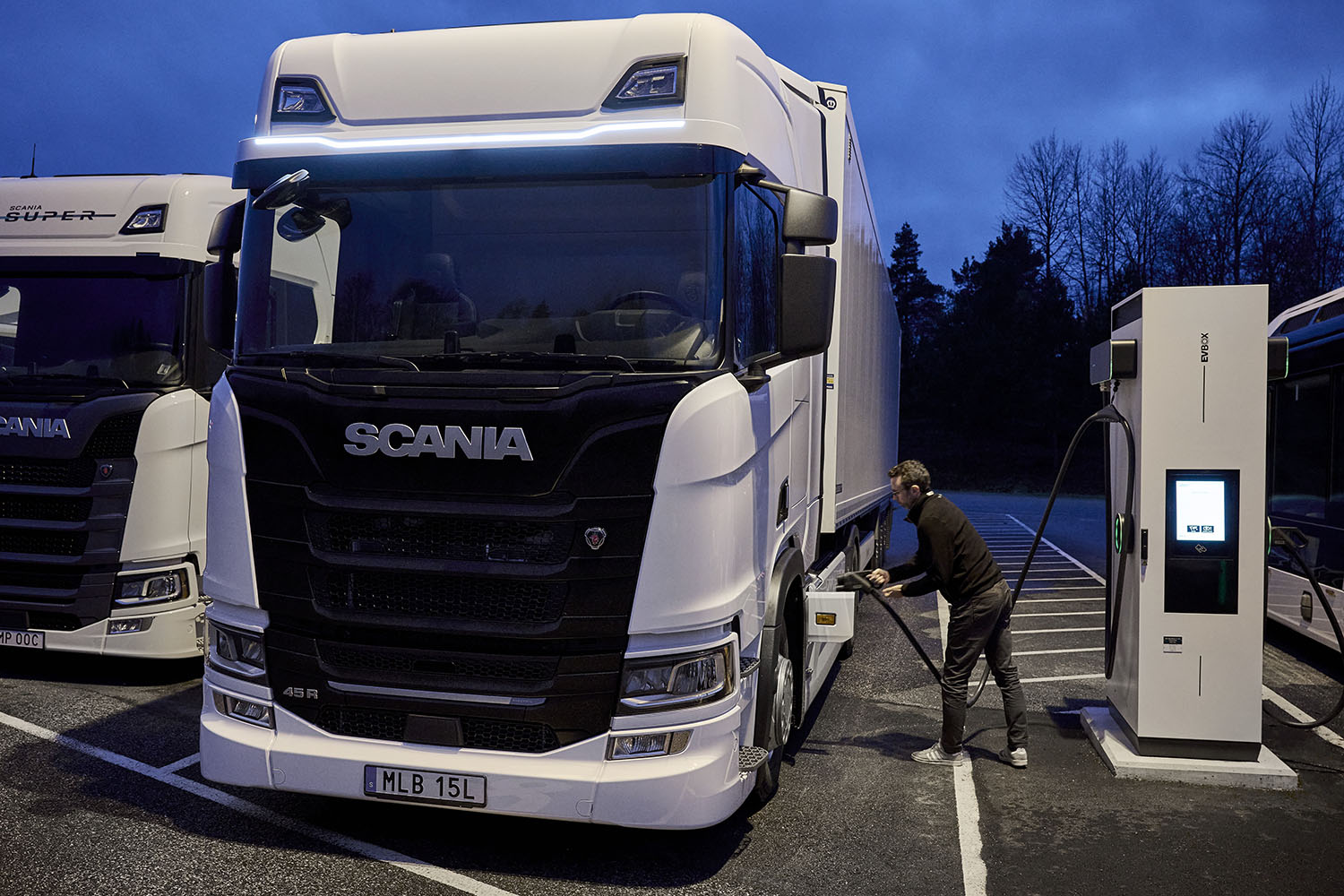
When Policy Ignores Physics: What Fleet Operators Are Really Saying About Zero-Emission HGVs
Summary
The zero emission HGV policy gap is no longer theoretical. The BVRLA HGV Outlook 2026 and the RHA Payload Loss Survey show that UK fleet operators accept the need to decarbonise, but the current regulatory trajectory underestimates hard constraints on payload, infrastructure and total cost of ownership (TCO).
Fleet operators are not asking for a free pass. They are documenting a zero emission HGV policy gap where regulations, as currently framed, do not line up with how trucks, depots, drivers and balance sheets actually work. This note sets their evidence against the UK government’s new HGV CO₂ emissions regulatory framework consultation and phase-out dates for diesel trucks.
Key Takeaways
- UK HGV operators describe trading conditions as challenging and see decarbonisation as an additional structural pressure rather than a standalone ESG project.
- Payload loss on electric HGVs at 44 tonnes is a quantified barrier that current UK derogations do not fix, forcing either reduced payload or more journeys.
- Zero emission HGV policy timelines assume diesel phase-out ahead of viable infrastructure, payload solutions and secondary markets, particularly for heavy and long-haul operations.
- Fleet funding models and razor-thin margins mean small inefficiencies or payload penalties are enough to stall operator demand for electric trucks.
- The evidence from BVRLA and RHA reveals a clear zero emission HGV policy gap between consultation rhetoric and the day-to-day operational constraints of fleets.
Main Analysis: The Zero Emission HGV Policy Gap
Put together, the BVRLA and RHA reports read like two sides of the same coin. The BVRLA HGV Outlook 2026 maps the macro pressures on the HGV sector, while the RHA payload loss work drills into a specific physics-led problem: battery weight and payload loss on electric 44‑tonne artics.
Both are built from operator evidence, not abstract modelling, and both point to the same conclusion: the UK zero emission HGV policy pathway is running ahead of the sector’s practical ability to comply without damaging economics.
The BVRLA Outlook shows a sector under sustained cost and regulatory pressure. 71% of operators describe trading conditions as challenging and only 18% are optimistic about the longer-term outlook.
Decarbonisation has moved from strategy decks into day-to-day operations, but infrastructure availability, vehicle purchase prices and residual value risk are now the dominant barriers, particularly for smaller, used-led fleets.
Around 70% of new trucks are acquired through rental and leasing structures, which shifts residual risk to funders and makes them wary of policy that could destabilise zero emission HGV values.
The RHA Payload Loss Survey then shows how a single regulatory design choice—the way the UK applies its 2‑tonne derogation for zero emission vehicles—creates hard penalties for electric 44‑tonne operations.
For many operators above 42 tonnes, existing rules mean either reduced payload per vehicle or additional trips to move the same freight, adding cost and complexity in a low-margin business.
In parallel, the UK government’s CO₂ regulatory framework consultation acknowledges weight issues but does not yet resolve them for the heaviest vehicles that carry most tonne-kilometres.
When you put this alongside the detailed cost modelling in Zero-Emission HGV TCO: Hidden Costs Battery vs Hydrogen Trucks, a clear pattern emerges: the real constraints on the UK zero emission HGV transition are payload, infrastructure and risk allocation, not a lack of ambition or technology awareness.
Why the Zero Emission HGV Policy Gap Matters
These reports collectively expose the reality layer beneath UK zero emission HGV phase-out dates.
On paper, the UK can target 2035 for new non-zero emission HGVs under 26 tonnes and 2040 for all others.
On the ground, fleets are juggling multi-year grid connection lead times, 7–10+ year asset lives and vehicle weight rules that reduce payload on exactly the trucks doing the heaviest work.
The result is rational caution, not climate denial.
BVRLA’s data shows operators stretching replacement cycles and using leasing to manage capital risk while they wait for clarity on infrastructure, incentives and residual values.
The RHA survey data shows that when operators model electric 6×2 and 4×2 tractors under current weight rules, they often cannot maintain their existing payload without extra journeys and higher energy costs per tonne delivered.
From the operator’s perspective, that is not an ideological objection to zero emission trucks; it is a question of arithmetic.
If the zero emission HGV policy gap is not closed, the likely outcome is a disorderly transition.
Large fleets with capital, customer backing and access to favourable power deals will move first, while SMEs either cling to diesel for as long as they can or exit the market altogether.
Both BVRLA and RHA evidence point towards a two-speed transition and a widening structural disadvantage for smaller operators.
What Constraint Are Fleet Operators Really Flagging?
The real constraint is not “technology reluctance”.
It is the combination of payload, utilisation and cost inside a regulatory framework that does not yet reflect those realities.
BVRLA members consistently highlight infrastructure and upfront cost as the main obstacles, and emphasize that uncertainty over future zero emission HGV residual values makes new technology a risky bet—especially for fleets that hold vehicles for more than five years or depend on a functioning second-hand market.
The RHA payload analysis adds a quantitative backbone to that story.
Under current UK regulations, their benchmarking shows that running an electric 44‑tonne 6×2 can cost around £28,000 per year more in “fuel” than its diesel equivalent, and a 40‑tonne 4×2 around £15,700 more.
When you layer in additional journeys required because of payload penalties, total operational costs increase by 18.7% for a 6×2 and 10.4% for a 4×2 to deliver the same payload.
In a sector with margins around 2%, that is not a minor friction; it is an existential problem.
Crucially, RHA’s own modelling also shows that when payload parity is restored and depot electricity can be procured at roughly £0.25/kWh, an electric 6×2 can generate a modest annual fuel saving versus diesel.
That mirrors the message from the zero emission HGV TCO calculator work: physics does not prevent electric trucks being commercially viable, but today’s policy and energy pricing choices do.
Why the Zero Emission HGVs UK Policy Gap Matters?
Current UK zero emission HGV policy is trying to solve an emissions problem with dates and manufacturer targets while outsourcing operational design to the market.
The BVRLA Outlook warns that “certainty on bad policy is still bad policy,” and the RHA payload findings show exactly how that plays out when vehicle weight regulations are misaligned with decarbonisation goals.
Three misalignments stand out:
- Weight and length rules vs decarbonisation goals: UK rules allow extra mass for batteries in some configurations but not in the 44‑tonne segment that underpins long-haul freight. That forces operators to choose between payload loss, more vehicle movements, or not adopting electric tractors in those use cases.
- Energy pricing vs adoption expectations: Both BVRLA and RHA highlight that high electricity prices undermine the running-cost case for electric HGVs, even when technology is available. Policy debates focus heavily on vehicle incentives and trial funding, but long-term industrial strategy to deliver competitively priced electricity to depots is less developed.
- SME reality vs regulatory design: Around 95% of logistics and coach businesses in the UK are SMEs. They hold vehicles longer, rely on used assets, and are directly exposed to residual value risk. Much policy appears to assume large, well-capitalised actors and then extrapolate their behaviour, which is optimistic at best.
In summary, the zero emission HGV policy gap arises because regulation treats the HGV parc as a homogenous fleet of generic units that can be pushed through the same transition funnel on the same timeline.
Operator evidence from BVRLA and RHA shows that the mix of duty cycles, payloads, funding models and grid constraints makes that assumption wrong.
What Are Fleet Operators Actually Asking For?
Neither the BVRLA HGV Outlook nor the RHA Payload Loss Survey calls for scrapping decarbonisation targets.
Instead, they ask for policy to reflect physics and economics more honestly and to close the zero emission HGV policy gap through targeted, technically informed adjustments.
The RHA’s three main asks are tightly focused: increase authorised gross vehicle weight for affected electric HGVs from 44 to 46 tonnes, increase drive axle limits from 10.5 to 12.5 tonnes, and convene a cross-industry technical group to update vehicle weight, length and Construction and Use regulations.
BVRLA’s message is more horizontal but aligned.
Operators want sustained government investment in infrastructure, fiscal measures to support a viable used zero emission HGV market, and regulatory certainty that is aligned with realistic product maturity and infrastructure roll-out, not just headline dates.
In effect, they are saying: do not just change the end date for diesel; design the surrounding system—power, depots, finance, residual support—so that the date is credible.
Both sets of evidence amount to the same request: stop treating fleet operator feedback as generic stakeholder input and start treating it as ground-truth constraints. Payload penalties, cost differentials and duty-cycle data are not lobbying lines; they are the engineering and economics that will determine whether the UK actually achieves its zero emission HGV targets.
Implications for Entrepreneurs, Investors and Policymakers
For entrepreneurs and technology providers, the opportunity is in solving the gaps that policy has not yet addressed.
That includes duty-cycle-specific optimisation tools, software that quantifies payload and routing impacts under different regulatory and price scenarios, and business models that de-risk early adoption for SMEs.
Turning the abstract zero emission HGV policy gap into concrete choices—what to electrify first, how to finance it, and how to manage payload and charging—creates real value for operators.
For investors, the key is to back platforms that sit at the intersection of vehicles, infrastructure and finance.
With around 70% of new trucks already funded via leasing and rental, there is a natural channel for innovations in risk sharing, performance-based contracts and data-driven residual management that can support a more orderly transition.
For policymakers, the lesson is that consultations acknowledging “maximum weight issues” and “market barriers” are necessary but not sufficient.
The evidence from BVRLA and RHA shows that current weight rules penalise electric artics, high electricity prices undermine running-cost advantages, and SME operators cannot absorb extra journeys or speculative residual risk on their own.
Bridging the zero emission HGV policy gap now requires regulation that is designed around real duty cycles and physics, not idealised fleet archetypes.
For operators working through these decisions, a structured zero emission HGV TCO calculator is no longer optional. It is the only way to stress-test payload assumptions, infrastructure constraints and energy prices before committing to high-capex vehicles that will shape fleet economics for a decade.
Closing Insight
Fleet operators have already done the hard work of mapping where zero emission HGVs can work now, where they might work soon, and where today’s combination of physics, infrastructure and regulation simply does not add up.
The real test for UK policy is whether it treats that operator evidence as a design constraint for net zero, or as an obstacle to be pushed aside by dates and targets.
Closing the zero emission HGV policy gap means taking that evidence seriously—and building the next phase of regulation around it.