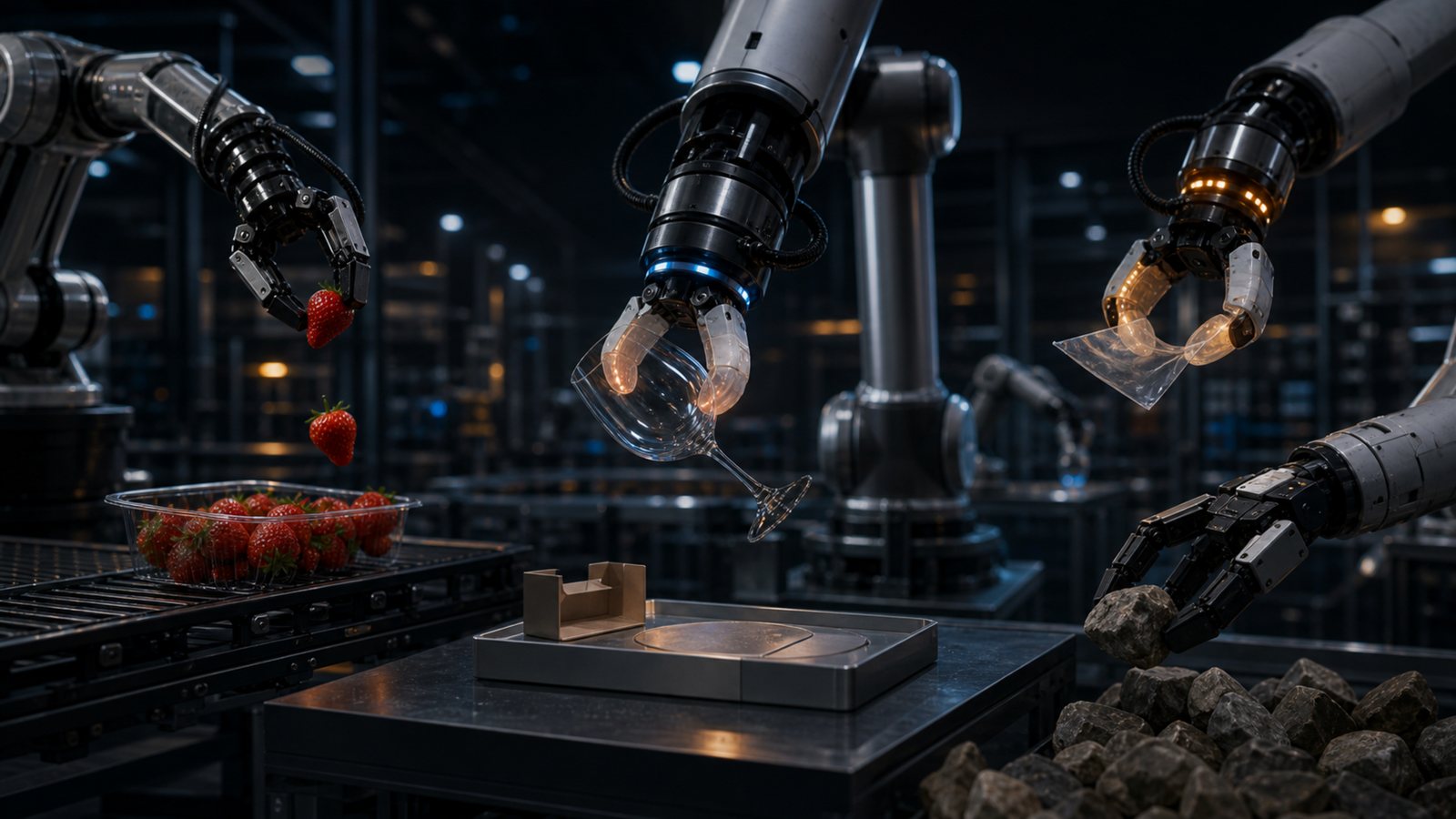
I am pleased to announce that Kirisense, where I serve as Chair, has been awarded funding through the Henry Royce Institute’s Industrial Collaboration Programme to support the development of our next-generation tactile sensing technology.
For any early-stage technology company, external validation matters. Customers matter most. Revenue matters even more. But competitive grant funding from respected institutions remains an important signal that independent experts see both technical merit and commercial potential.
This is the first grant funding secured by Kirisense and an important milestone for the company.
The project, which will be delivered in collaboration with the University of Sheffield, focuses on the development of a shear-sensing robotic fingertip capable of detecting force and slip in real time.
What excites me most is not the grant itself but the problem we are trying to solve.
The past decade has been dominated by extraordinary advances in artificial intelligence. Robots can now identify objects, understand their surroundings and make increasingly sophisticated decisions. Yet many still struggle with tasks that humans perform without thinking: handling delicate objects, adapting to uncertainty and responding to subtle changes during physical interaction.
A robot may know exactly what it is looking at. The harder challenge is manipulating it reliably.
That is where touch becomes important.
The next phase of robotics will not be defined solely by better AI models. It will be defined by systems that can interact with the physical world with greater dexterity, confidence and safety. In my view, tactile sensing will become as important to future robotic systems as machine vision became to the previous generation of automation.
Kirisense is pursuing a compact optical sensing architecture designed to detect force and slip without the complexity associated with many camera-based tactile sensing systems. The goal is simple: give robots richer information about what is happening at the point of contact.
The potential applications are extensive, from food handling and logistics through to healthcare, advanced manufacturing and, ultimately, humanoid robotics.
Why touch matters
The important point is that tactile sensing is no longer a specialist feature at the edge of robotics. It is becoming part of the core stack for systems that have to work in unstructured, human-designed environments.
The official Kirisense announcement sets out the funded project in more detail. The official Henry Royce Institute announcement provides context on the wider Industrial Collaboration Programme funding round.
Robotic touch is a technology deployment challenge because sensing performance must translate into dependable task completion outside the laboratory. The relevant Seven Barriers test is technical readiness at system level: a sensor must be manufacturable, integrable, durable and useful to the control stack, not merely sensitive in a demonstration. Commercial value emerges when tactile feedback reduces damaged goods, intervention rates or task failures enough to justify integration, support and retraining costs for an industrial customer.
Read the Original Kirisense Announcement
View the full Kirisense press release and learn more about the company’s work in robotic touch sensing.
Kirisense Press Release
As AI Gives Robots Brains, Kirisense Is Building Their Sense of Touch
Henry Royce Institute Backs Kirisense Project to Advance Robotic Dexterity
3 June 2026
The past decade has transformed what robots can see. Advances in artificial intelligence have unlocked remarkable progress in perception and decision-making. But outside carefully controlled environments, robots still struggle with many of the manual tasks people take for granted.
The challenge lies in the final few millimetres of interaction between machine and object. A robot may recognise a strawberry perfectly. Handling it without damage is another matter entirely.
Kirisense, a UK company developing advanced tactile sensing technology, has been awarded funding through the Henry Royce Institute’s Industrial Collaboration Programme to accelerate the development of robotic fingertips capable of sensing shear forces and slip in real time.
The project, which will be delivered in collaboration with the University of Sheffield, will focus on a new generation of tactile sensors designed to help robots understand not only when contact has been made, but how an object is moving within their grasp. That capability is fundamental to dexterous manipulation and represents one of the most significant remaining challenges in robotics.
The award forms part of the Henry Royce Institute’s latest Industrial Collaboration Programme funding round supporting innovative materials technologies with strong commercial potential across the UK.
Read the official Henry Royce Institute announcement.
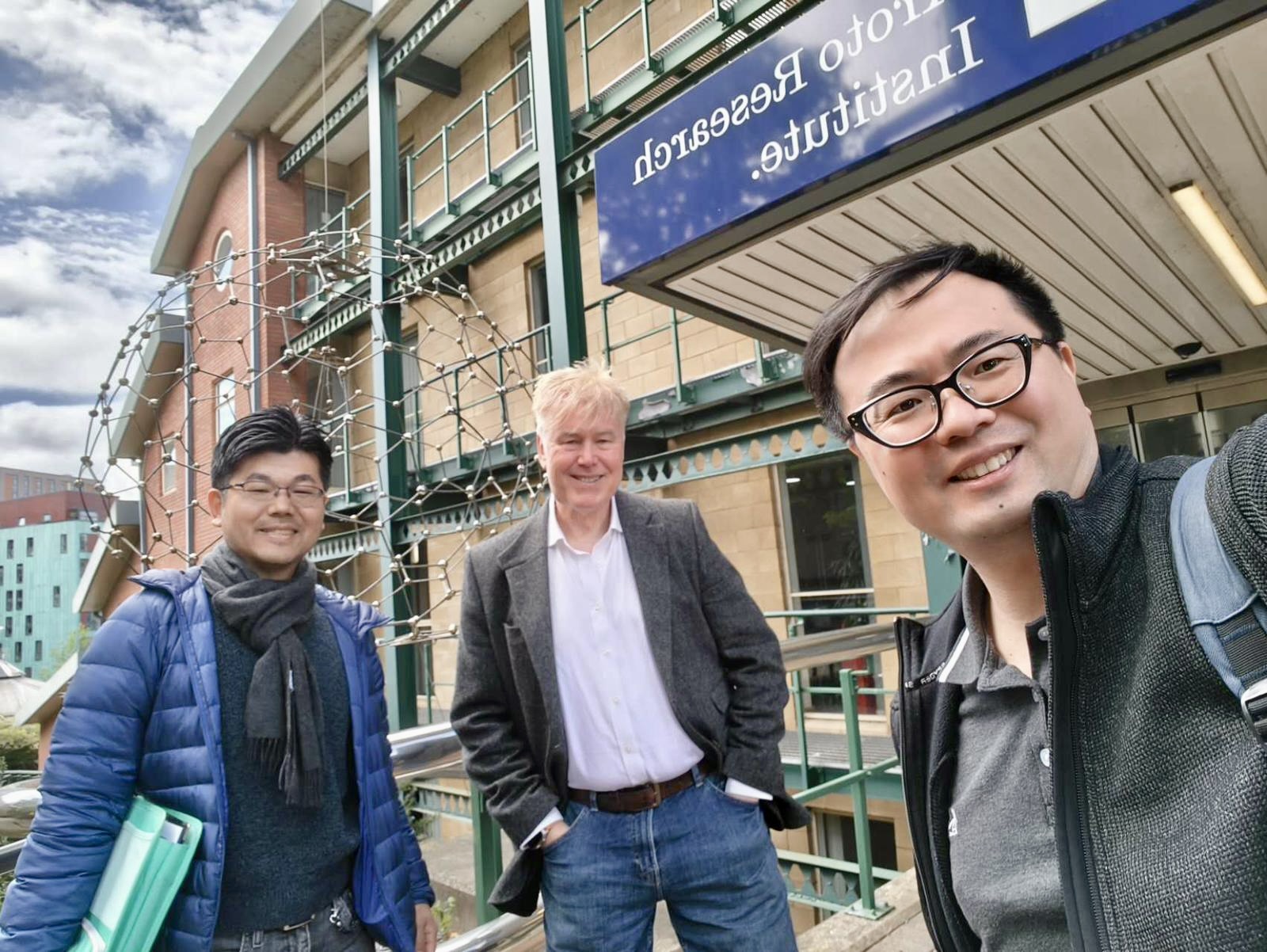
For Kirisense, the project represents an important step towards robots that can operate more effectively in the real world.
Most robots excel in structured environments where objects are predictable and carefully positioned. Outside those environments, successful manipulation depends on understanding what is happening at the point of contact. A slight movement, a changing load or the first signs of slip can determine whether a task succeeds or fails.
The Royce-funded project will focus on developing sensors capable of detecting these subtle interactions in real time, giving robots richer information about the objects they are handling.
Kirisense is pursuing a different approach from many tactile sensing systems currently under development. Rather than relying on camera-based architectures that require onboard imaging hardware and significant data processing, the company is developing a compact optical sensing platform designed to deliver high-speed force and slip detection with a simpler hardware footprint. The approach is intended to support easier integration into robotic grippers, hands and end-effectors while maintaining the responsiveness required for real-world manipulation tasks.
“AI has dramatically improved what robots know about the world. Our focus is on what happens when a robot actually interacts with it. The ability to detect force, movement and slip at the point of contact allows machines to respond to changing conditions as they occur. We believe tactile sensing will be a critical enabling technology for the next wave of robotics, particularly as systems move beyond structured factory environments into logistics, healthcare and everyday human environments.”
Kangsheng Bretherton-Liu, Founder and CEO, Kirisense
The technology has potential applications across a wide range of sectors, including food handling, logistics, advanced manufacturing, healthcare and the emerging humanoid robotics market.
“The robotics industry has spent years solving perception. The next challenge is manipulation. A robot may know exactly what an object is and where it is located. The harder challenge is handling it reliably when conditions are less predictable. We believe tactile sensing will become a foundational technology for robotics, much as machine vision became foundational for the previous generation of automation. This project helps move that vision closer to reality.”
Tim Harper, Chair, Kirisense
The Henry Royce Institute described the project as a “well-designed, timely and strategically important project” with clear benefits for both industrial and academic partners and the potential for significant impact. The funded project, “The Development of a Shear-Sensing Fingertip Prototype Demonstrator”, will commence in July 2026 and be delivered in partnership with the University of Sheffield.
University of Sheffield
About Kirisense
Kirisense develops advanced tactile sensing technology for robots. Its sensors enable machines to detect force, slip and contact conditions in real time, helping bridge the gap between robotic intelligence and physical dexterity. The company is focused on enabling safer, more capable automation across industrial robotics, logistics, healthcare and future humanoid systems.
Website: https://kirisense.com
About the Henry Royce Institute
The Henry Royce Institute is the UK’s national institute for advanced materials research and innovation. Royce brings together leading academic institutions, industry partners and research facilities to accelerate the commercialisation of advanced materials and support innovation across sectors critical to the UK’s future economy.
Website: https://www.royce.ac.uk
Interested in the Future of Robotic Touch?
Kirisense is developing advanced tactile sensing technologies designed to help robots interact with the physical world with greater dexterity, confidence and safety.