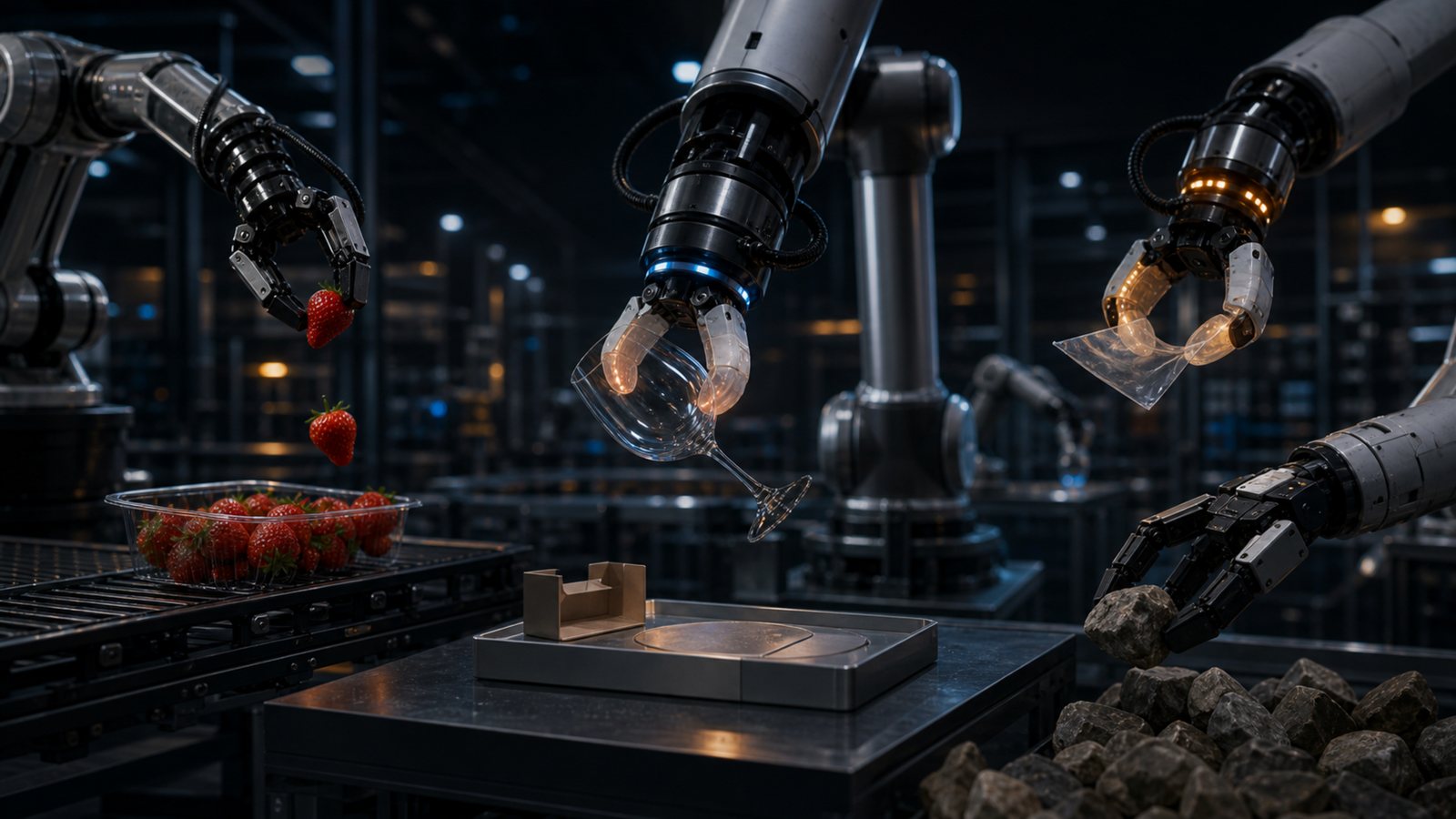
For the technology behind robotic touch, see the maintained Tactile Sensing for Robotics guide, covering force, shear, slip, sensor architectures and the economics of manipulation.
Over the past week, the humanoid robots sector has quietly crossed an important threshold.
For years, humanoid robots were a staple of technology conferences and YouTube demonstrations. The videos were impressive, but the commercial case remained uncertain. Investors largely stayed on the sidelines while engineers worked on locomotion, balance, vision systems and artificial intelligence.
That appears to be changing.
German robotics company NEURA Robotics has announced a Series C financing round of up to $1.4 billion backed by an extraordinary roster of investors including Amazon, Nvidia, Qualcomm, Bosch, Schaeffler and the European Investment Bank. Around the same time, reports emerged that Agile Robots is discussing an approximately $800 million funding round involving SoftBank, while Flexion has secured $50 million to build what it describes as the “brain” of humanoid robots. The scale of the shift is also reflected in CNBC’s coverage of humanoid robotics funding.
The significance is not simply the amount of capital involved. It is where the money is going.
These companies are building different layers of what is rapidly becoming a new industrial stack. Some are building the physical robot. Some are building the AI systems that control it. Others are developing the software platforms that allow robots to operate in real-world environments. As explored in this site’s analysis of AI sensor technology, intelligence only creates value in the physical world when machines can reliably sense and respond to it.
Taken together, they represent a growing conviction that humanoid robots are moving from research projects to commercial products.
Why Humanoid Robots?
The attraction of humanoid robots is often misunderstood.
The objective is not to create machines that look like people for the sake of it. The objective is to create machines that can work in environments already designed for people.
Factories, warehouses, distribution centres, farms, hospitals and care facilities have all evolved around human workers. Doors, stairs, shelves, tools, workstations and vehicles are built to human dimensions. Traditional industrial robots often require the environment to be redesigned around the machine.
Humanoids reverse that equation.
Instead of redesigning the workplace, they are designed to fit into the workplace that already exists.
That dramatically expands the range of tasks that can potentially be automated. It also connects humanoid robotics to the wider industrial race described in the analysis of how Chinese manufacturers are building scale and supply-chain advantage.
The Humanoid Robot Market Opportunity
The Financial Times’ coverage of NEURA Robotics funding recently highlighted McKinsey analysis of humanoid robotics suggesting that humanoid robots could create a market worth approximately $28 billion annually by 2030.
Whether that exact number proves correct is almost beside the point.
The broader trend is clear. Labour shortages, ageing populations and increasing pressure on productivity are driving demand for more flexible forms of automation. Traditional industrial robots excel at repetitive tasks in highly structured environments. Humanoids aim to address the much larger category of work that remains difficult to automate.
The first deployments are likely to focus on logistics, manufacturing, warehousing and material handling. These are environments where tasks are repetitive enough to automate but variable enough to challenge conventional robotics.
As costs fall and capabilities improve, the addressable market expands into healthcare support, food handling, agriculture, retail operations and countless other sectors.