Why AI Data Centres Are Overloading the Grid — And How Hydrogen and the Gas Network Could Bridge the UK’s Energy Gap
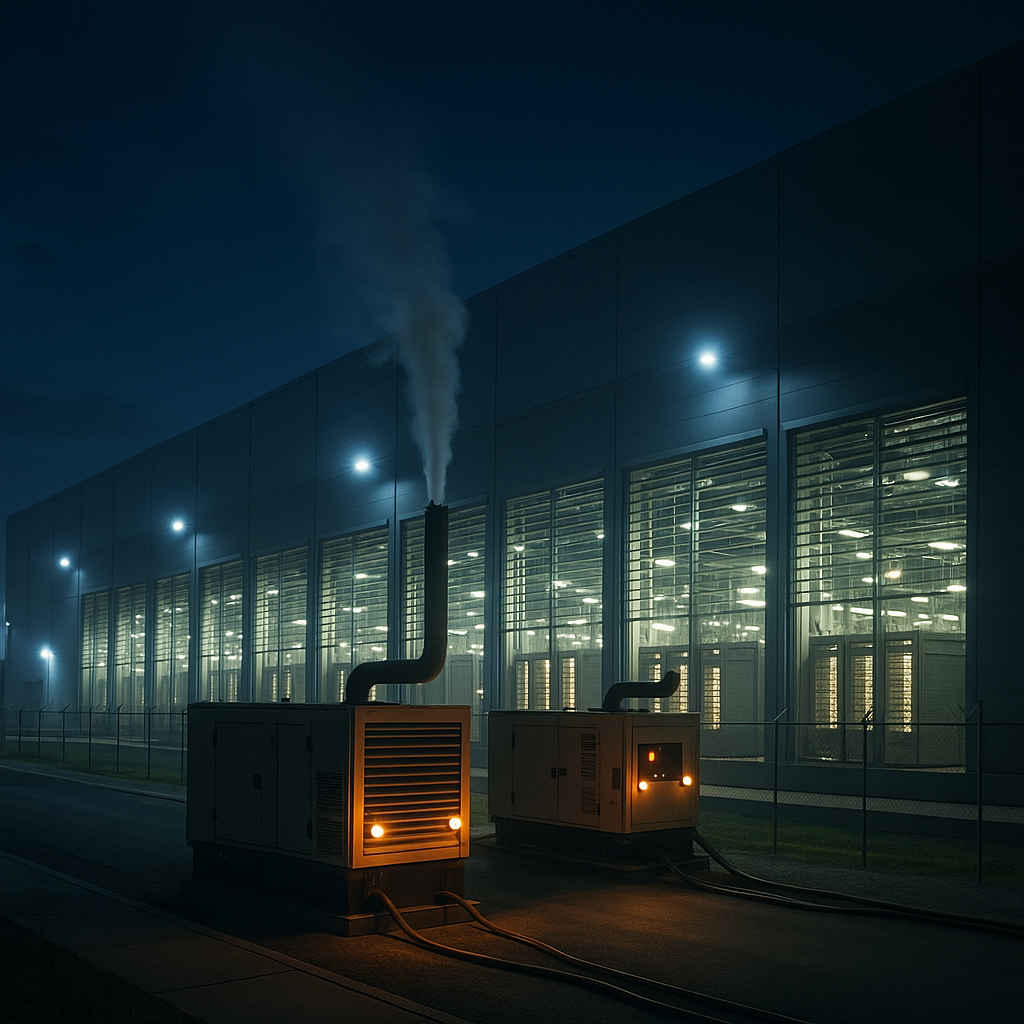
AI data centre energy demand is rising so quickly that it is now colliding with the limits of the UK’s electricity system. This analysis builds on earlier pieces exploring how AI data centres displaced BP’s Teesside hydrogen project and the structural issues examined in the UK Gas Grid Strategy . Together, they show how AI’s accelerating power needs are reshaping UK energy planning — and why gas and hydrogen are rapidly emerging as parallel energy systems.
The recent cancellation of BP’s flagship blue hydrogen plant on Teesside in favour of an AI data centre highlights a seismic shift in UK energy priorities – and exposes the extent of the grid connection crisis that is driving data centre developers toward the gas network as an alternative power source.
On 1 December 2025, BP formally withdrew its application for H2Teesside, a 1.2 GW blue hydrogen project that had been positioned as a cornerstone of the UK’s 10 GW hydrogen capacity target for 2030. The decision followed months of wrangling with landowners South Tees Group (STG) and Teesworks Ltd, which secured outline planning permission in August 2025 to develop a large AI-focused data centre on the same 115-acre plot at the former Teesworks steelworks site. BP cited “material change in circumstances” and a lack of anchor demand following Sabic’s cracker closure. [1] [2] [3] [4] [5] [6]
The Teesworks site had been designated an AI Growth Zone by the UK Government, and reports suggest Google was in advanced discussions to occupy the proposed data centre. Tees Valley Mayor Ben Houchen welcomed BP’s withdrawal, arguing the data centre would create “more long-term jobs, attract more investment and deliver future-proof growth”.
The UK Grid Connection Queue: A Capacity Crisis
According to NESO, total demand connection requests to the UK grid doubled from 40 GW in late 2024 to 125 GW by mid-2025, exceeding today’s national peak demand. Data centres alone now account for more than half of new connection requests. [7] [8]
In Greater London, outstanding connection requests total around 400 GW, though Ofgem believes only 30–40% will ever be built. Even so, this leaves more than 120 GW of genuine demand in regions with the UK’s most constrained electrical infrastructure.
Much of this pressure is being driven by rapidly rising AI data centre energy demand, which now shapes the majority of major new load applications across the UK.
Connection lead times for large users have grown tenfold, reaching up to 15 years. Yet half of developers still expect a grid connection within 1–2 years — a serious mismatch between expectations and system reality. [9] [10]
Data centre electricity demand is forecast to:
- triple by 2030 (NESO)
- increase sixfold by 2035 (National Grid)
- reach 26.2 TWh by 2030 (Oxford Economics/NIA), ~9% of UK electricity use [11] [12]
AI workloads require continuous baseload power at extreme densities. Reinforcement of the UK grid will take a decade or more. Developers, unwilling to wait, are paying up to 50% premiums to access power quickly. The result is a rapid pivot toward the gas network as a parallel energy system. [13] [14] [15]
The Turn to Gas: Data Centres Bypass the Grid
The surge in gas connection interest reflects the reality that AI data centre energy demand is overwhelming available electrical capacity far faster than grid reinforcements can be delivered.
Between August 2024 and August 2025, UK gas network operators received 86 data-centre connection requests. Five hyperscale facilities in southern England alone are seeking gas transmission connections totalling 2.5 GW of onsite power generation. [17] [18]
Gas connection times are typically 6–12 months, compared with 3–15 years for electricity. The economics are clear. The gas network has become the “fast connect” alternative for AI-driven expansion.
The UK Gas Networks Study: A Blueprint for Gas-to-Power Data Centres
In 2025, Wales & West Utilities (WWU) and SGN commissioned a major study with Apollo Engineering and Stantec to examine gas-to-power solutions — using natural gas, biomethane and hydrogen blends — for data centres across the UK. [21] [22]
The study found:
- Existing gas distribution networks have sufficient capacity in many locations to support data centre loads.
- Internal combustion engines (ICE) are cost-effective and deployable at scale today.
- Fuel cells offer higher efficiency and zero local emissions, and will fall in cost as the market matures.
- Data centres can run on biomethane today and transition to hydrogen blends or 100% hydrogen as infrastructure develops.
- Co-locating CHP, CCS, waste heat recovery and electrolysis can create circular, high-efficiency energy hubs.
The study examined real sites in Reading, Surrey and Cardiff, plus a hypothetical hyperscale location with no feasible grid connection. It concluded that gas-to-power can open up entirely new geographies for data centre development where electricity connections are unviable. [13]
CyrusOne’s FRA7 facility in Frankfurt — developed with E.ON — provides a working template: multiple 4.5 MW gas engines initially running on natural gas, capable of 25% hydrogen blends and upgradeable to 100% hydrogen. [32]
Biomethane Today, Hydrogen Tomorrow
One of the study’s most practical conclusions is that data centres do not need to wait for hydrogen pipelines. Biomethane is already flowing through the UK gas grid, produced from anaerobic digestion, landfill gas and other waste feedstocks. [24] [23]
Future Biogas is explicitly courting data centre operators, pitching biomethane not just as back-up or peaking power but as reliable baseload capable of replacing diesel generators. [25]
Government policy supports this direction. Green gas incentives run through to at least 2043, and gas network operators are actively seeking new biomethane connections. Trials by SGN, Cadent and others show the network can safely handle rising volumes of low-carbon gas and, in time, hydrogen blends. [26] [27] [28]
At the transmission level, National Gas’s Project Union — a £164m hydrogen backbone announced in August 2025 — will connect industrial clusters in Teesside, Humber, Merseyside, South Wales and beyond. Data centres sited near these hubs could become anchor loads for local hydrogen economies. [29]
Fuel Cells vs Internal Combustion Engines
In practical terms, the WWU/SGN work identifies two main technology families for gas-to-power data centres: [30] [22]
Fuel cells
- High electrical efficiency (up to ~60% for SOFC).
- Near-zero local emissions.
- Modular, scalable architecture.
- Can be configured for natural gas, biomethane or hydrogen.
- Higher capex today, but costs are falling.
- Already proven in live UK sites such as Teledata’s 1.2 MW hydrogen-ready installation in Manchester. [31]
Gas engines (ICE)
- Lower capex and widely available from multiple OEMs.
- Can already operate with 20–25% hydrogen blends; most platforms are upgradeable to 100% hydrogen.
- Well-suited to large multi-MW blocks (4–10 MW per engine).
- Higher NOx than fuel cells, but modern low-NOx designs meet strict air quality rules.
- Can be deployed as CHP, using waste heat for district heating or absorption cooling.
For colocation and campus-scale sites up to 50–100 MW, both technologies are viable and can be delivered within 12–18 months. At hyperscale (hundreds of MW), the study concludes that larger CCGTs or hybrid architectures will be needed. [32]
The Hydrogen–Data Centre Nexus
This dynamic becomes clearer when recognising that AI data centre energy demand increasingly requires long-duration and dispatchable power sources — an area where hydrogen is uniquely positioned.
Teesside has often been framed as a straight fight between “hydrogen” and “AI”. In practice, the relationship is more complex. If data centres become major hydrogen users — for backup, firming or even full baseload — they could actually accelerate the hydrogen transition rather than crowd it out. [33]
Large cloud providers already sign long-term PPAs for wind and solar, but 24/7 matching is hard when weather is intermittent and batteries only cover short durations. Hydrogen-fuelled turbines or fuel cells can provide zero-carbon firm power for hours or days, replacing diesel and supporting 24/7 decarbonisation. [34]
Conversely, data centres can help create hydrogen supply. Co-locating electrolysers with large compute campuses enables surplus renewable power (or off-peak grid power) to be converted into hydrogen, stored on site, and consumed later for power generation or exported to nearby industry. [18]
Policy, Planning and the Role of Gas Networks
1. Gas networks as transition enablers
Policymakers are now beginning to acknowledge that meeting rising AI data centre energy demand will require leveraging every available low-carbon pathway, not only electricity.
For years, gas infrastructure has been treated as a sunset asset. The WWU/SGN work, along with hydrogen blending trials, points to a different future: networks capable of moving biomethane and hydrogen as well as natural gas. [35] [36]
2. Data centres as critical national infrastructure
Since 2024, UK data centres have been treated as Critical National Infrastructure. DESNZ has convened an AI Energy Council, bringing NESO, Ofgem and major tech firms together to avoid an energy-policy car crash. Even so, the Teesside episode exposed internal tensions: senior ministers reportedly favoured the data centre, while the energy department was more sympathetic to hydrogen. [37] [38]
3. Grid reform is necessary but slow
Ofgem and NESO are reforming the connections queue — shifting from “first come, first served” to “first ready, first connected” and clearing hundreds of gigawatts of zombie projects — but most transmission upgrades will still land in the 2030s. [39] [40] [41]
4. Gas-to-power is a bridge, not an end state
Gas engines and biomethane are a pragmatic near-term answer, not a permanent solution. Long term, any credible net-zero pathway will depend on a mix of nuclear, long-duration storage, renewables and 100% green hydrogen. The key is to design gas-to-power solutions that can transition to hydrogen over time rather than locking in unabated fossil use. [11] [22]
Strategic Options for Developers
For data centre operators trying to build capacity in the UK over the next decade, a realistic playbook is emerging:
- Site selection: prioritise locations with existing gas capacity, proximity to hydrogen clusters and planned electrical reinforcement.
- Gas-to-power as primary or bridging power: deploy gas engines or fuel cells on biomethane today, with contractual options to switch to hydrogen blends and then 100% hydrogen.
- Hybrid architectures: combine delayed grid connections with on-site gas-to-power so that gas provides the bridge and later becomes resilience and flexibility capacity.
- Circular energy hubs: integrate CCS, heat networks and electrolysis to maximise overall efficiency, monetise waste heat and offer flexibility services to NESO.
- 24/7 decarbonisation: match annual MWh with PPAs for wind/solar, and use hydrogen-fuelled generation to deliver round-the-clock low-carbon power.
Conclusion: Two Infrastructures, One Problem
The Teesside decision was framed as a simple choice between hydrogen and AI. In reality it reveals something deeper: the UK is trying to build world-leading AI infrastructure on top of an electricity system that cannot yet cope with the load.
Data centre demand is rising far faster than our ability to reinforce the grid. Faced with 10–15 year connection timelines, developers are doing what developers always do: finding the path of least resistance. Right now, that path runs through the gas network.
The WWU/SGN study shows that gas-to-power using engines and fuel cells is technically mature, financeable and deployable in months rather than years. Run on biomethane today and hydrogen tomorrow, it offers a way to keep building data centres without waiting for the grid to catch up — and, done properly, it can accelerate rather than slow the transition to hydrogen.
If the UK wants to lead both in AI and in decarbonisation, it will need to treat gas and hydrogen networks not as relics of the fossil era, but as flexible platforms that can relieve grid constraints, anchor new hydrogen ecosystems and keep the lights on in the data halls that now drive so much of the modern economy.
References (click to expand)
- BBC News – BP pulls out of Teesside hydrogen plant
- IOM3 – BP hydrogen and carbon capture project withdrawn
- Data Centre Review – AI data centre replaces H2Teesside
- Place North East – BP exits Teesside scheme
- The Lead – AI data centre wins battle for Teesworks land
- The Chemical Engineer – BP scraps Teesside hydrogen plant
- LinkedIn – The Demand Queue Crisis
- LinkedIn – UK grid overwhelmed by data centre requests
- LinkedIn – Navigating the Power Puzzle
- Slaughter & May – Energy Dividend: Data Centre Investment Strategy
- Nuclear Industry Association – AI and nuclear capacity
- Energy UK – Powering the Cloud
- Stantec – Using Gas & Hydrogen to Power Data Centres
- AInvest – UK AI Data Centre Energy Dilemma
- S&P Global – Data centre power demand doubling
- Piller – Prospects for grid-independent AI data centres
- Argus Media – UK data centres request more gas connections
- WWU – Hydrogen use in UK data centres
- The Telegraph – Tech bosses scramble for gas amid AI blitz
- WWU – Long Term Development Statement Summary 2025
- WWU – Gas Networks Powering Data Centres of the Future
- Apollo Engineering – Powering Data Centres with Gas Networks
- Future Biogas – Data centre partnerships
- SGN – Biomethane and the Future of Gas
- DataCenterDynamics – Future Biogas launches unsubsidised CO₂ capture
- SGN – Low-carbon future trial
- Cadent – Future of the Gas Network (2024)
- WWU – Long Term Development Statement 2025
- National Gas – Project Union Hydrogen Backbone
- UKERC – Gas Network Data Centre Study
- Manchester Digital – Hydrogen-ready fuel cell data centre
- WWU – Data Centre Energy Demand Study
- Westwood Energy – Hydrogen Compass (Sept 2025)
- Driving Hydrogen – Hydrogen fuel cells for data centres
- Centrica – Hydrogen blending breakthrough
- UK Gov – Hydrogen Blending Consultation
- DataCenterDynamics – Ofgem interconnection reform
- The Register – Data centres turn to gas
- DataCenterDynamics – DESNZ grid reform
- Data Centre Review – Grid queue reforms
- Ofgem – Connection reforms
- Tony Blair Institute – UK AI Infrastructure Strategy
- Goldman Sachs – AI energy forecast
- McKinsey – Unlocking the AI energy revolution
- S&P Global – European DC power demand doubling
- Carbon Herald – BP scraps Teesside H2 plan
- Enerdata – BP UK blue hydrogen cancellation
- BeBeez – Teesside hydrogen project scrapped
- DataCenterDynamics – BP hydrogen cancellation
- H2 View – H2Teesside shelved
- North East Bylines – Critique of Teesside hydrogen hype
- Forecourt Trader – BP cancels hydrogen plant
- Telegraph – BP abandons UK green energy plant
- Smart Networks – Hydrogen Data Centre Project
- APC – Hydrogen Technology Overview
- National Gas – 2025 Winter Gas Outlook
- WWU – Future of Energy Case Studies